
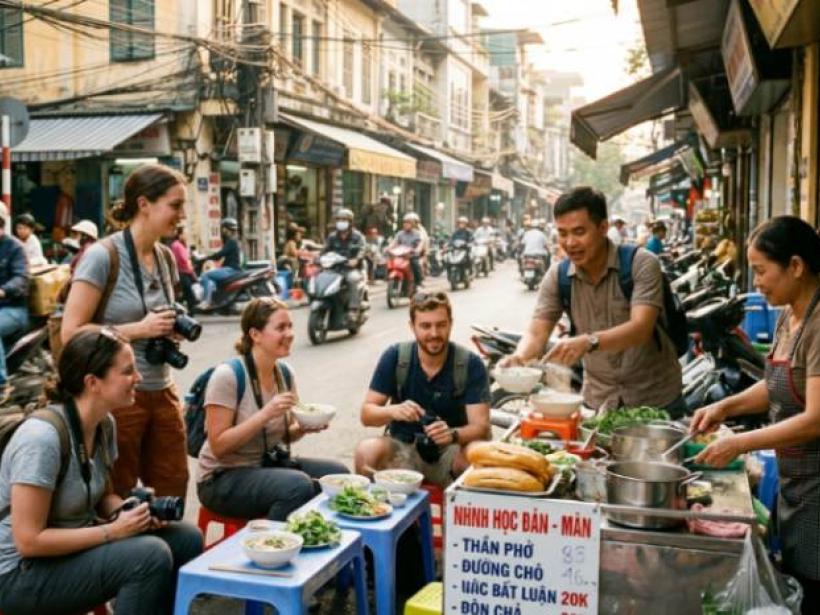

Hanoi street food tours are guided walks through neighborhoods where you stop at local stalls to eat authentic Vietnamese dishes. Tours cost $15–40 per person, last 2–3 hours, and include 5–8 food stops. Your English-speaking guide takes you to places where locals actually eat. The best tours operate in the Old Quarter, around Hoan Kiem Lake, and the French Quarter.
What Is a Hanoi Street Food Tour?
You meet your guide early in the morning, walk through neighborhood streets, stop at food stalls, and eat what vendors are cooking. Instead of sitting in a restaurant, you'll stand at a plastic stool next to construction workers eating breakfast. Your guide translates menus, explains each dish, and shares the history behind recipes. Most tours last 2–3 hours and visit 5–8 stalls.
Why take a guided tour? Hanoi has 8 million residents, and street food is everywhere. Without a guide, you'll eat at overused tourist spots or spend hours confused. A local guide takes you to stalls with good reputations, clean setups, and genuinely good food.
Where Do Tours Operate?
The Old Quarter is Hanoi's oldest district, built during the 1300s–1400s. It's deliberately chaotic with narrow streets and food stalls spilling into alleyways. You'll encounter plastic stools, early risers eating breakfast at 6 AM, and constant motorbike traffic. The food is inexpensive and authentic. A complete meal costs $2–4. Historically, each street specialized in one product: Hang Gai Street sold silk and now sells banh mi; Hang Dieu Street sold lanterns and now serves grilled meats.
Around Hoan Kiem Lake is cleaner and more tranquil. Streets are wider. You'll find vendors selling fresh fruit, Vietnamese coffee, and local snacks. The atmosphere suits photography. Prices are slightly higher ($1–2 per dish), but the overall experience feels less overwhelming. If you're traveling with children, consider our guide to family vacation spots.
The French Quarter was built during French colonization (1887–1954). Wide boulevards, colonial villas, and traditional cafés define the area. Street food vendors have adapted to accommodate tourists. You'll discover banh mi with pâté, fresh juices, and egg coffee. The area experiences fewer crowds than the Old Quarter.
How Much Do Tours Cost?
Budget Tours ($15–20): 5–6 stops, basic guide.
Mid-Range Tours ($20–30): 7–8 stops, experienced guide, family-owned stalls.
Premium Tours ($30–40): 8–10 stops, cooking class, market tour, small groups. For premium experiences, our luxury chauffeur and executive travel guide offers insights into upscale transportation worldwide.
When Should You Go?
Best season: October–April (59–77°F). Hanoi summers are oppressive (86–104°F and humid).
Best time: Early morning (6:00–8:00 AM) when stalls are open and locals are eating.
Avoid: Vietnamese holidays (Tet in January–February, National Day in September).
Is It Safe?
Yes. Food is prepared fresh in front of you. Vendors have served tourists for 10+ years without major problems. Some tourists experience mild digestive discomfort from unfamiliar food. Avoid tap water and consider taking probiotics. If you're concerned about travel fatigue, our guide to rest at high altitude offers practical strategies for adjusting to new environments.
Final Thoughts
A Hanoi street food tour is a guided walk through authentic neighborhoods where you eat at local stalls. Tours cost $15–40, last 2–3 hours, and include 5–8 stops. The food is safe, guides speak English, and you'll discover Hanoi's genuine food culture. For budget travelers, our budget travel in Bali guide uses similar money-saving strategies for exploring street food.
A $20 tour frequently becomes the most memorable part of a Hanoi visit.