
When is the cheapest time to book flights to Italy?
You usually find the lowest transatlantic fares when you book 2 to 4 months before departure. Booking further out rarely helps, and last-minute tickets in summer can cost double the average price.
For intra-European flights the window is much shorter. Booking 4 to 8 weeks ahead catches the best deals, especially on budget carriers like Ryanair and easyJet. The cheapest months to fly are February, early March and November. July and August are the most expensive, and September remains pricey because of fashion weeks and harvest-season tourism.
Midweek departures on Tuesday and Wednesday typically cost less than Friday and Sunday flights. Early-morning and late-night departures also save you money. Set a price alert on Google Flights or Skyscanner for your preferred route and watch the fare graph for a few days before you book.
How do I find cheap train tickets between Italian cities?
Italy has two main high-speed train operators: Trenitalia (Le Frecce and Intercity) and Italo. Both run fast, comfortable services between major cities like Rome, Florence, Milan, and Naples. The single best way to cut your ticket cost is to book well in advance. A Rome, Florence seat that costs €45 on the day of travel often drops below €20 when booked a month ahead.
For shorter hops between smaller towns, regional trains are the better deal. These trains run on fixed-price tickets that never sell out and do not get more expensive closer to departure. You cannot reserve a seat, and the journey is slower, but a two-hour regional ride can cost a third of the high-speed fare. Check the Trenitalia site for "Regionale" services and be sure to validate your paper ticket at the platform machine before boarding to avoid a fine.
Both Trenitalia and Italo offer discount fares with strict conditions. Super Economy and Low Cost tickets are non-refundable and non-changeable, while Economy and Flex fares give you some flexibility for a higher price. A quick price comparison on a single route shows the difference:
- Rome to Milan, booked three weeks out on a weekday: Super Economy from €29.90 versus a Base fare over €86.
- Florence to Venice, same booking window: Italo Low Cost at €19.90 against a Flex fare of €54.
- Naples to Rome on a regional train: a flat €12.50 any time, while the fast train ranges from €19.90 to €48 depending on when you book.
- Milan to Verona: the regional train takes an hour longer but costs €10.50, compared to €28-45 on the high-speed service.
- Turin to Genoa: a direct regional ticket is €13.50, while the fast option with a change in Milan starts at €32 and takes almost as long.
What type of accommodation gives the best value outside city centers?
Family-run agriturismi and guesthouses in residential districts give you the best value outside the historic cores. An agriturismo is a working farm that rents rooms, often including a breakfast made from its own produce. You get a quiet setting and a host who knows the area, while paying noticeably less than a city-center hotel.
Renting an apartment through a trusted platform in a neighborhood where locals live cuts costs further, especially for stays of four nights or more. A kitchen lets you shop at neighbourhood markets and prepare simple meals, which cuts your daily spending straight away. Look for areas just beyond the main ring roads of Florence, Rome or Bologna, where public transit reaches the center in 15 to 25 minutes.
Common options and their practical trade-offs:
- An agriturismo in Tuscany or Umbria pairs lodging with farm breakfasts and rural quiet, best reached with a rental car.
- A family guesthouse in a Roman suburb such as Monteverde gives you a residential feel and direct bus links to Trastevere.
- A self-catering apartment in Milan’s Porta Romana district places you among bakeries and small shops, a few metro stops from the Duomo.
- A converted trullo or masseria in Puglia works well for longer stays in the low season, when nightly rates drop sharply.
- A room in a private home booked directly with the owner suits solo travelers who want local tips and a simple, clean place to sleep.
How can I see museums and landmarks for free or less?
State museums across Italy are free on the first Sunday of each month, a scheme called Domenica al Museo. This includes heavy hitters like the Colosseum, the Uffizi Gallery, and Pompeii. The trade-off is predictable: huge crowds and long queues, especially in Rome and Florence. You cannot reserve a slot online for the free day, so you will need to arrive early.
City passes can save you money if you plan on hitting multiple paid sights in a short window. The Roma Pass and the Firenze Card bundle public transit with skip-the-line entry to two or more museums. A pass only pays off if you visit three or four major sites in a day or two. Do the math on the individual ticket prices before buying one, because a pass is not a discount for a light itinerary.
Many of Italy’s most stunning sites are always free. Churches like St. Peter’s Basilica, Santa Maria Novella, and the Pantheon do not charge admission, though some areas like climbing the dome might cost a few euros. You can also explore historic neighborhoods, outdoor markets, and public piazzas without spending anything. Mix a few paid headliners with these permanently free experiences.
- State museums and archaeological parks are free on the first Sunday of the month, with no online reservations available for that day.
- The Roma Pass covers two museums and public transit for 48 hours, and a 72-hour version includes a third site.
- In Florence, the Firenze Card gives you 72 hours of access to most major museums without needing separate reservations.
- All churches that are active places of worship are free to enter, though you should dress with covered shoulders and knees.
- Outdoor landmarks like the Trevi Fountain, the Spanish Steps, and the bridges over the Grand Canal cost nothing to see.
- Some museums offer reduced evening tickets in summer, typically half the daytime price for the last two hours before closing.
Where should I eat to keep food costs low?
Skip the formal ristorante and head for a family-run trattoria or osteria. These spots serve home-style cooking without the white tablecloths or service charge, and a full meal with house wine often costs half of what you would pay in a restaurant with a printed English menu. Look for a handwritten daily specials board and a crowd of locals at lunchtime.
For the cheapest meal of the day, buy lunch ingredients at an alimentari, a small grocer or deli. You can get fresh focaccia, sliced salumi, local cheese and a drink for a few euro, then eat it on a bench in the nearest piazza. If you want a hot meal, lunch is also when trattorias offer a fixed-price menu that includes two courses, water and coffee for a set rate that is far lower than the same dishes ordered in the evening.
Drink your coffee standing at the bar instead of sitting at a table. In cities like Rome or Florence, the same espresso costs up to three times as much the moment you take a seat, especially on a popular square. Walk in, order at the counter, drink quickly and pay the lower bar price that locals pay every morning.
What are the hidden costs that surprise first-time visitors?
Italy adds several small charges that most travelers do not expect on the first trip. The main one is the city tourist tax, a nightly fee of a few euros per person charged at hotels and guesthouses in places like Rome, Florence, Venice and Milan. The exact amount depends on the city and the accommodation category, and you pay it at check-out, not when you book.
Restaurants also add a cover charge, called coperto, which appears on the bill as a fixed amount per person. Bread brought to the table is rarely free, and tap water is not served unless you specifically ask for acqua del rubinetto. Ordering bottled water costs extra, and in busy tourist areas the markup is noticeable.
- You pay a city tourist tax per night at most hotels, often in cash at check-out.
- Most sit-down restaurants add a coperto, a per person cover charge, even if you only order coffee.
- Bread placed on the table is not automatically free, and you will see it on the bill.
- Asking for tap water instead of bottled water avoids a charge that can double your drink cost.
- Public toilets in train stations and some city centers require a small coin payment, so keep change handy.
- Parking inside limited traffic zones, called ZTL areas, triggers a fine that rental companies pass on weeks later.
Check your hotel confirmation for the exact tourist tax and ask the server before accepting bread or bottled water. A little awareness of these rules keeps the final bill close to what you actually ordered.
Frequently asked questions
Is it cheaper to fly into a smaller Italian airport?
Yes, often. Low-cost carriers fly into airports like Bergamo instead of Milan Malpensa or Ciampino instead of Rome Fiumicino. The ticket can be significantly cheaper. Just check the bus or train transfer time to the city center so the savings are not eaten up by a long taxi ride.
Do I need to tip in Italian restaurants?
Tipping is not expected the way it is in North America. Many places add a coperto, a per-person cover charge, to the bill. If service is exceptional, leaving a euro or two in cash is a kind gesture but never a percentage of the total.
Can I drink tap water in Italy?
Tap water is safe to drink across Italy. In cities and towns you will find public drinking fountains, called nasoni in Rome, where you can refill a bottle for free. Asking for tap water in a restaurant is not common and may be refused, so you will usually buy bottled water with your meal.
What is the cheapest way to get from the airport to the city?
Shared shuttle buses and regional trains are almost always the cheapest options. Express trains like the Leonardo Express in Rome are fast but cost more. A taxi or private transfer will be the most expensive choice, especially during peak hours.
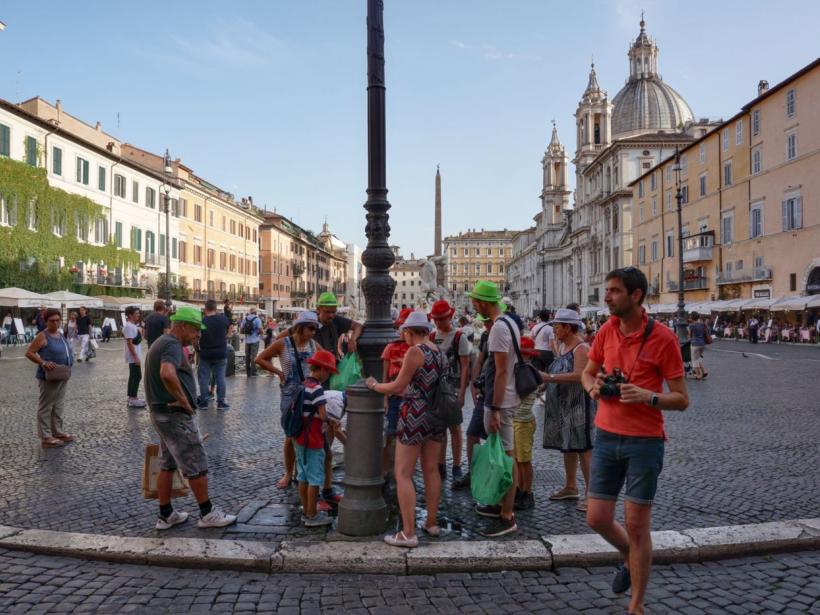
Photo: Irina Balashova, Pexels (Pexels License)