
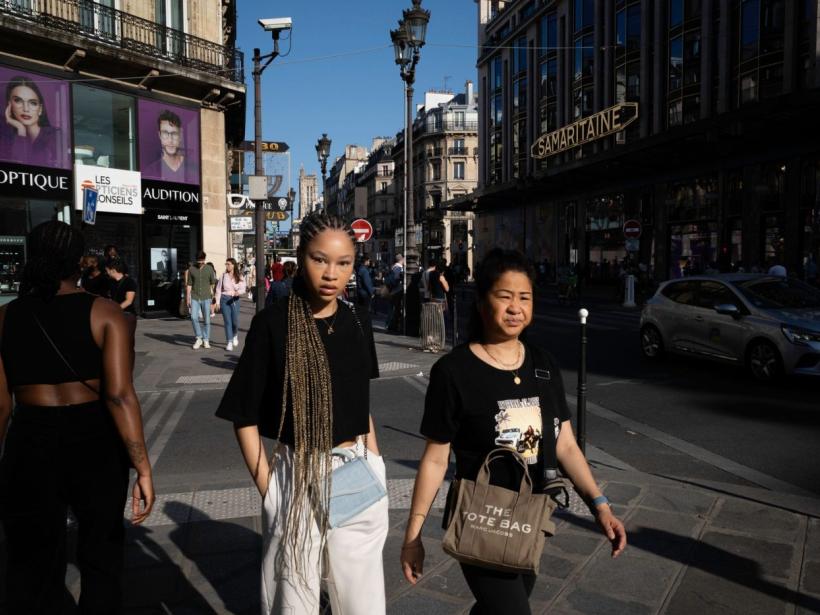
What do official government advisories say about France right now?
The US State Department rates France at Level 2: Exercise Increased Caution, a status unchanged in 2025. This advisory points to the persistent threat of terrorism and occasional civil unrest. A Level 2 rating means stay aware of your surroundings, not cancel your trip. The UK Foreign Office also does not advise against travel to mainland France but highlights a high threat of terrorism.
The French government maintains its own Vigipirate security plan at the "heightened security" level across the entire country. You will see armed patrols near tourist landmarks, transport hubs, and places of worship. Bag checks at museum and hotel entrances are routine and mandatory. These measures are a standard precaution, not a sign of immediate danger.
Are there specific areas in France I should avoid?
Government advisories rarely name entire cities as unsafe, but they do point to specific neighborhoods in larger urban centers where caution is warranted after dark. In Paris, the northern 18th and 19th arrondissements, particularly around Marx Dormoy, Porte de la Chapelle, and parts of Stalingrad, see higher rates of petty crime and occasional gang activity. In Marseille, the northern quartiers such as La Castellane and parts of the 3rd arrondissement are known for drug-related incidents that can flare up without warning. Tourist landmarks, from the Eiffel Tower to the Calanques, sit in well-policed districts with a heavy security presence.
Staying in central, well-lit areas removes nearly all the risk that advisories describe. The following zones are flagged most often by local authorities and travel security updates:
- Northern 18th and 19th arrondissements of Paris, especially around Gare du Nord late at night
- Parts of Seine-Saint-Denis, including Saint-Denis and Stains, where petty theft spikes after events at the Stade de France
- Marseille’s northern districts, including the 3rd, 13th, and 14th arrondissements
- Certain blocks in central Nice near the train station after midnight, where pickpocketing and street harassment are reported
- Isolated suburban RER stations on lines B and D late in the evening
- Border areas near the Calais ferry terminal, where migrant camps and smuggling activity persist
For a typical visitor staying in the Latin Quarter, Le Marais, or Vieux Lyon, these areas are simply not on the map. Local guides repeat the same practical rule: if you would not walk through a similar neighborhood in your own city at night, apply that judgment here.
How does the safety situation affect public transport and major events?
France operates under a permanent security framework called the Vigipirate plan, which is visible in transport hubs and at large gatherings. You will see armed patrols by soldiers and police in major train stations, airports, and near tourist landmarks. Security checks at the entrance to terminals are routine, and unattended luggage is treated as a serious threat, often leading to a cordoned-off area and a controlled detonation by the bomb squad.
Public transport continues to run on normal schedules, but you should expect random bag inspections on the Paris Metro, RER commuter trains, and intercity services. These checks are quick but mandatory, and refusing them means you will be denied access. At airports, the standard advice is to arrive three hours early for international flights, as document checks and additional screening can lengthen queues without advance warning.
For major events like music festivals, sporting matches, or national celebrations, the Vigipirate plan adds layers of visible and hidden security. Organisers work with prefectures to set up secure perimeters, and you will pass through metal detectors and bag searches to enter. Protests, especially in central Paris, are announced in advance, and local authorities publish maps of the march route. The practical rule is to avoid the immediate area of a demonstration, not because of general danger, but because confined streets and a heavy police presence can lead to unpredictable crowd movement and the use of tear gas if tensions rise.
What are the most common scams targeting tourists?
Pickpocketing and street scams are the most frequent risks in high-footfall areas like the Eiffel Tower, Montmartre and the Champs-Élysées. The signature ploy involves a stranger "finding" a gold ring at your feet and insisting you take it, then demanding money as a reward. Another classic is the petition scam, where young people with clipboards block your path and distract you while an accomplice lifts your wallet. The friendship bracelet trick in Montmartre works the same way: a person ties a bracelet on your wrist without consent and then aggressively insists on payment.
Transport hubs are prime locations for the bump-and-grab. At Gare du Nord and on busy Metro lines, a sudden shove in a crowd often masks a hand slipping into your bag. The Metro ticket "helper" is another common encounter: someone offers to assist you at the ticket machine, then either pockets your change or demands a fee for the unsolicited help. You can sidestep nearly all of these by refusing all unsolicited approaches with a firm, calm "non, merci" and keeping your valuables in a zipped inside pocket.
- Keep your phone and wallet in a zipped inside jacket pocket, not a back trouser pocket, and avoid setting your bag on an empty chair at a café terrace.
- Ignore anyone who tries to hand you a rose, a bracelet or a petition. Do not engage; keep walking without breaking stride.
- Buy Metro and RER tickets only from the official blue machines or staffed counters. Decline help from anyone lingering near the machine.
- If someone drops an item at your feet, do not pick it up. Step around it and walk away.
- Carry a colour copy of your passport and leave the original in the hotel safe. Report a theft immediately at the nearest police station to get the official statement you will need for insurance.
What practical steps can I take to stay safe in France?
Lower most risks with a few habits that take minutes to set up. Before you leave, register with your country’s embassy or consulate through their online portal. This gives you direct alerts if the security situation changes in your area. Download the official SAIP app (Système d’alerte et d’information des populations), which sends location-based warnings to your phone during emergencies.
How you carry your things matters more than where you go. Keep your passport, backup card and emergency cash in the hotel safe, not in a back pocket or an outer bag compartment. A crossbody bag with the zipper against your chest works well in crowded metro cars and busy squares where pickpockets operate. Avoid placing your phone on an outdoor table where a passerby can grab it while distracting you with a petition.
- Register with your embassy’s traveler program before departure.
- Store your passport and spare payment card in the hotel safe, not on your person.
- Carry a crossbody bag with the opening turned toward your body in crowds.
- Never leave your phone or wallet on a café table facing the street.
- Stay alert in dense tourist zones and avoid engaging with petition scammers.
- Share your live location with a trusted contact when traveling alone at night.
How do local guides and residents describe the current mood?
In Paris, Lyon, and Bordeaux, daily life continues with its usual rhythm. Residents go to work, cafes fill up by mid-morning, and major museums operate on their standard schedules. The security presence in train stations and near landmarks has become a permanent part of the cityscape, and locals treat it as routine rather than alarming.
Walking tour leaders advise visitors to adopt the same calm awareness that Parisians practice. Keep your bag closed and in front of you on the metro, avoid deserted underpasses late at night, and stick to well-lit streets. Residents describe a city that remains alert but not tense, where the practical habits of urban safety are second nature.
Guides in Nice and Marseille point out that the Mediterranean pace of life softens any sense of urgency. Outdoor markets, public beaches, and evening promenades stay busy. The consensus from those working on the ground is that France feels watchful in the same way any large European city does, and visitors who follow local cues about where and when to move around will find the atmosphere welcoming and manageable.
Frequently asked questions
Is Paris safe for tourists right now?
Yes. Central Paris and the main tourist districts are heavily policed and see millions of visitors without incident. Stay alert in crowded spots for pickpockets, and avoid any area where a demonstration is underway.
Should I cancel my trip because of protests or strikes?
Not usually. Strikes in France are often announced in advance and mainly affect transport. Check local news and your airline's app before heading to the airport, and build extra time into your schedule on strike days.
Do I need special travel insurance for France?
A standard comprehensive travel insurance policy is sufficient. Make sure it covers trip interruption, medical expenses, and theft. The US State Department recommends checking that your policy includes coverage for any pre-existing conditions.
Photo: David Kouakou, Pexels (Pexels License)