
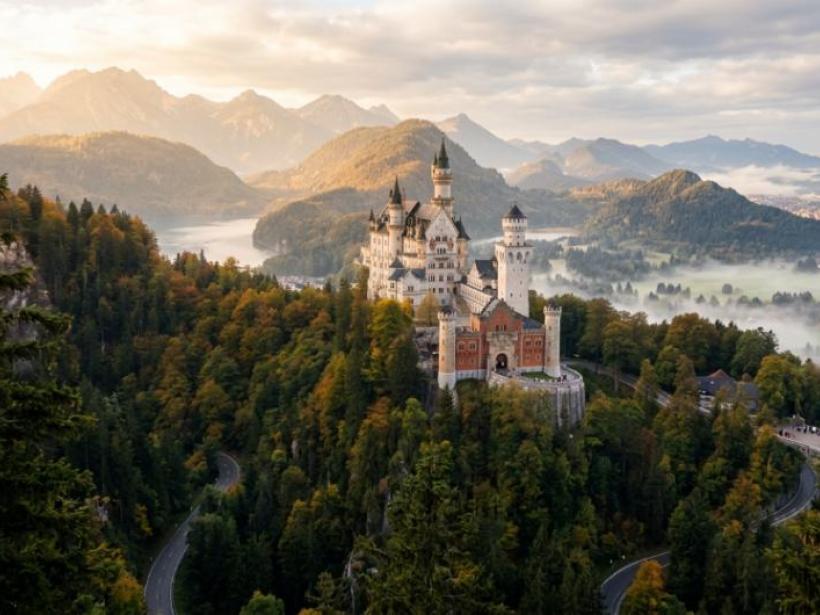

From the rolling vineyards of Franconia to the jagged peaks of the Bavarian Alps, the Romantic Road (Romantische Straße) is more than just a 460 km route—it is a journey through Germany’s soul. Established in 1950 to revive post-war tourism, it has evolved into Europe’s most iconic scenic drive, linking 28 towns where time seems to have stood still.
Why This Route Belongs on Your Bucket List
The Romantic Road offers a curated sequence of "perfect moments." It’s a masterclass in cultural preservation, where medieval walls, cobblestone streets, and baroque palaces form a continuous narrative of German history. Much like the serene beauty found in a Santorini travel guide, this route prioritizes aesthetic charm and historical depth.
Legendary Stops: From Wine to Castles
While the route features dozens of villages, these are the non-negotiables:
- Würzburg: Your starting point. Home to the UNESCO-listed Residence Palace and the Old Main Bridge, where sipping local Silvaner wine at sunset is a rite of passage.
- Rothenburg ob der Tauber: The jewel of the route. This is the most preserved medieval town in Europe—expect timber-framed houses and a Christmas atmosphere that lasts 365 days a year.
- Nördlingen: A geological marvel. Built entirely within a 15-million-year-old meteorite crater, the town’s stone walls contain millions of microscopic diamonds.
- Augsburg: One of Germany's oldest cities, offering a deep dive into Roman history and the Renaissance wealth of the Fugger dynasty.
- Füssen & Neuschwanstein: The grand finale. The castle that inspired Disney towers over the Alpine foothills. If you are planning a trip here during the spring break, you might also be interested in the best family vacation spots in March for more seasonal inspiration.
Logistics: How to Navigate Like a Pro
| Mode of Travel | Best For | Pro Tip |
| Rental Car | Maximum flexibility | Follow the brown signs; GPS will often try to divert you to the faster (but boring) Autobahn. |
| Romantic Road Bus | Solo travelers/Non-drivers | Runs seasonally (April–October) connecting major highlights. |
| Cycling | Active adventurers | Use the D-Route 9, which follows quiet paths away from main traffic. |
Timing Your Trip:
- May – September: Best weather for outdoor cafes and hiking.
- October: Golden vineyards and fewer crowds.
- December: Magical for the Christmas Markets in Rothenburg and Dinkelsbühl.
The Perfect 4-Day Itinerary
- Day 1: Würzburg to Rothenburg. Explore the Residence, then drive south for a "Night Watchman" tour in Rothenburg.
- Day 2: The Walled Cities. Stop in Dinkelsbühl (voted Germany's most beautiful town center) and end in Nördlingen.
- Day 3: Roman Roots & Rococo. Head to Augsburg and visit the Wieskirche—a Rococo masterpiece in the middle of a meadow.
- Day 4: The Alpine Finish. Drive to Füssen, tour Neuschwanstein, and take the Tegelberg cable car for panoramic views. When staying in these higher elevations, make sure to check out these high-altitude rest tips to ensure a good night's sleep.
Travel Tips
- Book "Inside" the Walls: Staying overnight in a medieval town like Dinkelsbühl after the day-trippers leave is a completely different experience.
- Professional Inspiration: Even travel legends like Rick Steves emphasize that the magic of the Romantic Road lies in the slow pace and the small-town hospitality.
- Start Early: To see Neuschwanstein without a thousand other people, aim for the first tour of the morning.