
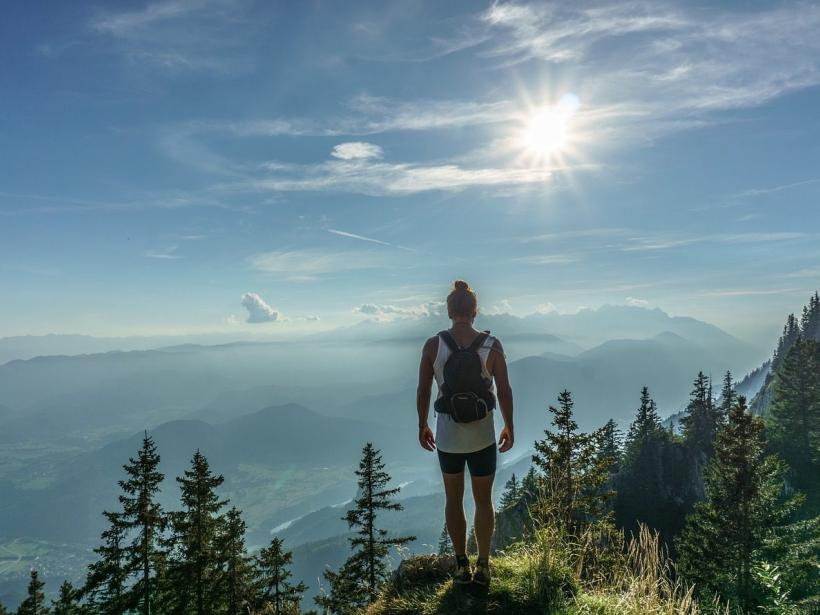
What should I pack first for a weekend in the mountains?
Start with the core set that works in every season: a base layer, a warm mid layer, a waterproof rain shell, sturdy footwear, water, a headlamp, navigation and a small repair kit. Once these are in the pack, seasonal extras are a short add-on.
- Two clothing layers plus a rain shell with taped seams and a hood.
- Broken-in hiking boots or trail shoes with an aggressive outsole.
- At least one litre of water per half day of walking, plus a filter or purification tablets.
- A headlamp with spare batteries, even for a day hike.
- An offline map on your phone, a paper backup and a compass you know how to read.
- A repair kit: duct tape wrapped on a card, a zip tie and a spare lace.
Lay everything on the floor before it goes into the pack. Anything you cannot explain a use for stays at home.
How do I dress for the mountains in each season?
Layers work better than one thick jacket because you add and remove warmth as you climb and stop. Start with a base layer that moves sweat away from the skin, add a fleece or light insulated mid layer, and finish with a shell that blocks wind and rain. Take the shell off on the ascent and put it back on the moment you stop.
- Spring: waterproof boots with grip, a soft-shell jacket, thin gloves and a warm hat for cold mornings on the ridge.
- Summer: quick-drying shorts or trousers, a long-sleeve shirt for sun and insects, a light rain shell and a cap.
- Autumn: a fleece mid layer, waterproof over-trousers, sturdy boots and spare dry socks in the pack.
- Winter: insulated waterproof boots, gaiters, a down or synthetic jacket, ski gloves and eye protection against wind and snow glare.
Footwear matters more than any jacket. Trail shoes suit dry summer paths, while spring mud and autumn wet rock call for boots with a deep tread and ankle support. Break in new boots on two or three short walks before the trip, never on the mountain itself.
What belongs in a mountain first-aid kit?
For a two-day trip, a first-aid kit should fit in a zip-lock bag and cover four things: pain, wounds, blisters and stomach trouble. Take painkillers such as ibuprofen, antiseptic wipes or solution, adhesive plasters, sterile gauze, elastic bandage and blister plasters like Compeed. Add rehydration salts, something for diarrhoea and an antihistamine for allergic reactions.
If you take prescription medicine, pack it in its original box with a double supply, split between your pack and a pocket. On the trail, treat a blister early: stop, dry the skin and tape the plaster on before the blister bursts. For small cuts, rinse with clean water, wipe with antiseptic and cover with a plaster. A sprained ankle you wrap with the elastic bandage, and if the pain does not ease within an hour, turn back.
- Painkillers and fever tablets, plus any personal prescription drugs in their boxes.
- Antiseptic wipes, plasters of several sizes and sterile gauze.
- Blister plasters and a small roll of medical tape.
- Elastic bandage for sprains and a pair of small scissors.
- Rehydration salts and an antihistamine.
What does a mountain instructor say about safety?
An instructor's first rule is to read the forecast the evening before and again at breakfast, because mountain weather can change within hours. Wind, rain and sudden fog decide more than fitness does. If the forecast is poor, choose a lower route instead of cancelling.
Before setting off, tell someone your route and expected return time, and leave a copy on paper. Carry a paper map and compass even if your phone has a GPS app, since cold drains batteries fast. Keep the group together and match the pace to the slowest walker.
- Check the forecast twice: the evening before and on the morning of the hike.
- Share your route and return time with someone who stays behind.
- Pack a paper map and compass as a backup to your phone.
- Set a clear turnaround time and stick to it, even close to the summit.
- Keep the group together and never let anyone walk out of sight.
What should I leave at home?
Every kilogram on your back costs effort on the climb and control on the descent. On a two-day trip you sleep indoors or in a tent you carry anyway, so comfort items rarely earn their weight. Leave at home anything you would use only "just in case".
- A second pair of heavy boots or extra street shoes, one pair on your feet is enough.
- Full-size toiletries, decant soap and toothpaste into small containers.
- More than one change of clothes, layers work better than spare outfits.
- A hairdryer, a laptop or other electronics you will not use on a trail.
- Books, board games and other camp entertainment beyond one small deck of cards.
- Excessive packaged food, plan meals by the day instead.
If the pack feels heavy in the hallway, it will feel worse on a steep slope.
How do I pack a weekend pack so it stays light?
Start with the heaviest items low and close to your back, then build outward and upward. Roll soft clothing into gaps instead of folding it flat, and keep the sleeping bag or spare layer at the bottom where it fills the base. Aim for a total load of roughly 8-12 kg for two days, depending on your own weight and the season.
Keep rain gear and water within reach. Put a waterproof shell in the top lid or an outer side pocket so you can pull it on without unpacking, and carry one bottle in a side pocket you can reach while walking. A pack that sits close to your back and rides above the hips carries better than a loose one.
Weigh the pack before you leave and put it on with the hip belt fastened first. If you cannot close the lid without forcing it, take something out rather than loosening the straps.
- Line the pack with a large waterproof bag or liner before anything else goes in.
- Place the heaviest items low and against your back, never at the top.
- Roll clothing into gaps and stuff small items into the lid pocket.
- Keep the shell and one water bottle in an outer pocket you can reach.
- Weigh the loaded pack and aim for 8-12 kg for two days.
- Fasten the hip belt first, then adjust the shoulder straps and load lifters.
Frequently asked questions
How heavy should a weekend mountain pack be?
Aim for a pack you can carry uphill for several hours without constant rest stops. Most weekend walkers carry well under a fifth of their body weight. Weigh the bag at home and remove anything you have not used on a previous trip.
Do I need hiking boots for a two-day trip?
Yes if the route is rocky, steep or wet. Boots with ankle support protect you on loose ground and descents. For gentle valley trails in dry weather, trail shoes with a grippy sole are enough.
What if the weather forecast changes before I leave?
Check the mountain forecast again the evening before and on the morning of departure. Conditions at altitude often differ from those in the valley. If strong wind, thunderstorms or heavy rain are forecast, change the route or postpone the trip.
Can I rely on my phone for navigation?
Use it, but do not depend on it alone. Cold drains the battery fast, and signal disappears in many valleys. Carry a paper map of the area, a charged power bank and a headlamp in case the walk takes longer than planned.
Photo: dreamypixel, Pixabay (Pixabay Content License)