
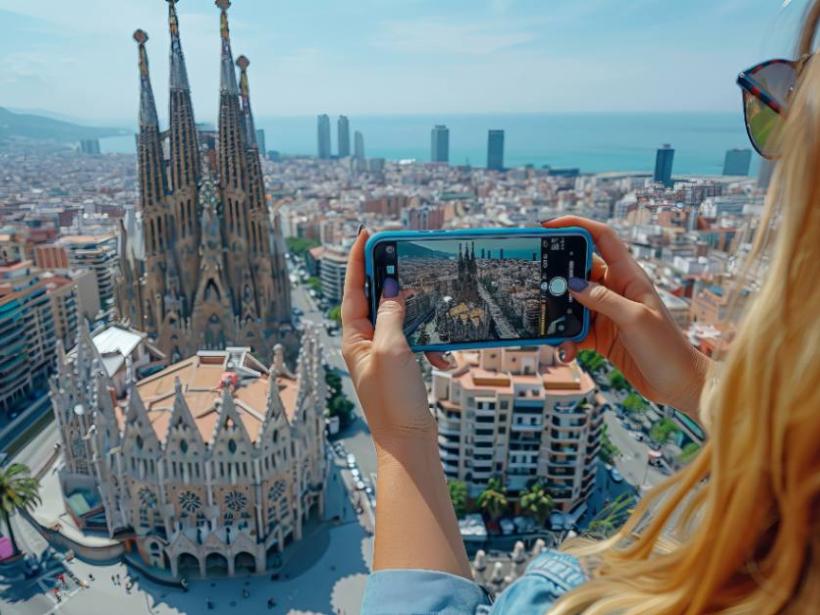

May, June, and September are the best months to travel to Barcelona. The heat hasn't peaked, the crowds are thinner than August, and prices sit below the summer high. If money is the deciding factor, January and February beat every other month by a wide margin.
That's the quick version. Here's the longer one, with the tradeoffs nobody puts on the postcard.
The Weather, Month by Month
Spring gets underrated. From mid-April through June, daytime highs run 20-25°C (68-77°F), and rain is light enough that it rarely wrecks a day of walking. Barcelona is also least crowded in the shoulder windows of March-April and September-October, so you get good weather without fighting for a table at lunch.
September might be the best-kept secret on the calendar. School's back in session for most of Europe, so the crowds ease off, but the sea hasn't cooled down yet – water temperatures stay swimmable, sometimes near 25°C (77°F), straight through the month.
August is the one to think twice about. Average highs land around 28-29°C (84°F), and heat waves above 35°C (95°F) aren't unusual. Add the humidity off the Mediterranean and a city running at full tourist capacity, and it stops feeling like a vacation for a lot of people. If you go anyway, plan sightseeing for morning and evening, and treat midday as a pool or a nap.
Winter surprises people who expect something colder. Highs during calm stretches reach 15°C (59°F), and the city sees only about four days a year that drop below freezing. You'll want a jacket, not a parka.
When Is the Cheapest Time to Travel to Barcelona?
January and February, no contest. Flights and hotels drop right after the holidays, attractions are quieter, and you're not competing with anyone for a dinner reservation. The tradeoff is obvious: cooler weather and shorter days. For anyone chasing cheap trips rather than a beach tan, this is the window.
A few other ways to keep costs down regardless of season: book two to three months ahead if you're aiming for May, June, or September; skip the last two weeks of August, when local vacationers and tourists overlap; and look at four-star hotels over five-star ones, since the city's new tourist tax hits luxury stays hardest.
|
Season |
Months |
Weather |
Crowds |
Cost |
|
Winter |
Dec-Feb |
Mild, occasional rain, 8-15°C |
Low |
Lowest |
|
Spring |
Mar-May |
Warm, mostly dry, 15-24°C |
Low to medium |
Medium |
|
Summer |
Jun-Aug |
Hot, humid in August, 25-31°C |
High, peaks in Aug |
Highest |
|
Fall |
Sep-Nov |
Warm early, cooler and wetter late |
Medium |
Medium |
Why People Keep Going Back
Barcelona fits beach, mountains, architecture, and food into a city small enough to cross by metro in twenty minutes. You can swim before lunch and be standing in a 2,000-year-old Roman street by early afternoon.
Antoni Gaudí did most of the heavy lifting for the city's reputation. La Sagrada Família is still unfinished after more than 140 years of construction, and it doesn't resemble anything else built in the last century. Park Güell and Casa Batlló carry the same style through the rest of the city.
The food side runs deeper than most visitors expect. La Boqueria market sells produce and seafood a few steps from restaurants that turn it into dinner the same night. That's not staged for tourists. It's how a lot of Barcelona still eats.
Worth knowing before you plan around Instagram photos of empty plazas: Barcelona pulled in roughly 16 million visitors in 2025, and the city is now trying to slow that number rather than grow it. Officials want fewer leisure travelers and more cultural and business visitors, and the tax hike is one of the tools they're using to get there. A trip booked now, especially outside July and August, will still feel calmer than one booked a few years from now if that trend holds.
Things to Know Before You Go
A handful of practical notes, gathered from more general travel tips worth reading before any European city trip:
The tourist tax jumped in April 2026. Hotel guests now pay €10-15 per person, per night depending on category, roughly double the old rate. Holiday rentals run up to €12.50 a night, up from about €6.25. Build that into your budget, especially for longer stays.
Short-term rentals are also being phased out citywide, with a full ban planned by 2028. Check that any listing you book is still legally licensed before you hand over a deposit.
Pickpocketing is a genuine risk on La Rambla, on the metro, and near the big sights – a good travel wallet is a smarter investment than most people think, and it's a lot cheaper than replacing a stolen passport mid-trip.
Meal times run late. Lunch rarely starts before 2 pm, dinner not before 8:30. Restaurants open earlier than that are usually built for tourists, not locals.
Most museums close on Mondays, so build your schedule around that before you show up to a locked door.
If you're weighing whether the region is worth the trip at all right now, it helps to check how safe Europe is currently as a broader baseline before narrowing down to any one city.
What to Actually Do There
The landmarks everyone mentions are worth the hype, mostly: La Sagrada Família (book timed tickets weeks out for summer), Park Güell (go early to beat both heat and lines), and Casa Batlló and La Pedrera, a short walk from each other.
The neighborhoods matter as much as the monuments. The Gothic Quarter has narrow medieval streets with Roman ruins underfoot. El Born mixes boutiques and tapas bars around the Picasso Museum. Gràcia is quieter and more residential, with small squares that don't show up on most tourist maps.
For food, La Boqueria covers the basics, but the better move is a rooftop dinner in Eixample, where you can watch the sun go down over Gaudí's rooftops, or a Sunday vermouth hour, which is a real local habit and not a tourist invention.
For a break from the city itself, Barceloneta Beach sits close enough to the old town for a short swim, Bunkers del Carmel gives you a hilltop view of the whole skyline at sunset, and Montserrat, an hour outside the city, makes a solid day trip if you want mountains instead of sand.
Mistakes Worth Skipping
Booking Sagrada Família or Park Güell tickets at the last minute is the most common one – both sell out days or weeks ahead once the weather turns warm. Planning a packed walking day in August heat is another; shift the hard sightseeing to morning and evening and treat 1-5 pm as downtime. And don't let La Rambla stand in for the whole city. It's crowded and overpriced by local standards, while the streets a few blocks off it show a lot more of how the city actually runs day to day.
FAQ
What do people wish they'd known before going to Barcelona? Mostly the small stuff: restaurants near major sights mark up prices, tap water is fine to drink so bottled water is optional, and the metro shuts down around midnight on weeknights, so plan cabs or rideshares for a late dinner.
Is Barcelona friendly to Americans? Yes, day to day. Locals are used to a steady flow of English-speaking visitors, and service staff in tourist areas generally speak English. Attitudes toward tourism itself are more strained, because of housing costs and overcrowding, but that tension is aimed at the volume of visitors overall, not at Americans specifically.
Why is there a travel warning for Spain right now? The U.S. State Department has Spain at Level 2, "Exercise Increased Caution," which is the same tier as most of Western Europe and mainly reflects general terrorism risk. The one exception is Ceuta, a Spanish territory near Morocco, raised to Level 3 in August 2026 after a migrant crossing incident at the border. That's unrelated to Barcelona and doesn't affect mainland trip planning.
Which city is nicer, Madrid or Barcelona? Depends what you're after. Barcelona has the beach, the Gaudí architecture, and a more laid-back pace. Madrid has better museums (the Prado and Reina Sofía alone are worth the trip), stronger nightlife, and food that leans more traditionally Spanish rather than Catalan. Neither one is the wrong choice.
Bottom Line
Barcelona works in almost any month, which is unusual for a city this popular. The real decision isn't whether to go. It's which version of the trip you want: warm and social in early summer, quiet and cheap in winter, or golden and calm in September. Pick the season that fits your budget and your patience for crowds, then lock in tickets for the big sights before you land.