
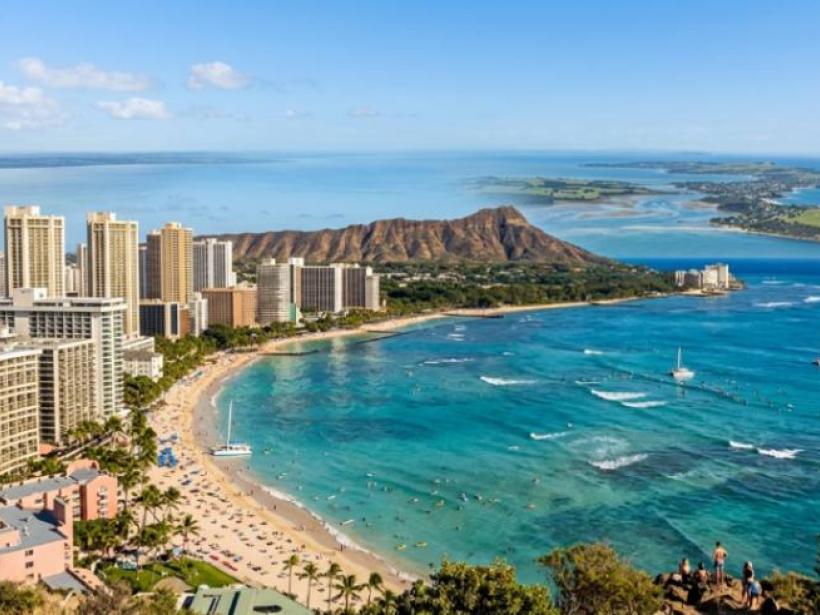

For most first-time visitors, the best time to visit Hawaii is April, May, September or October. Those months are warm and mostly dry, and they fall between the July rush and the holiday crush. If you're chasing whales, big waves or glassy snorkeling water, though, the answer shifts.
We've built this for mainland travelers planning a week or so on the islands, with some wiggle room on dates. If you're still weighing Hawaii against other trips, our United States travel guides are a good place to compare. Everything below comes from NOAA weather averages, state visitor counts, and the official whale and hurricane seasons.
Key takeaways
- Honolulu's average high only moves between 81°F and 89°F all year (NOAA 1991–2020 normals).
- December gets about four and a half times as much rain as June in Honolulu.
- Humpback whales are generally seen November through April, peaking January to March (NOAA).
- Hurricane season runs June 1 to November 30, and 2026 was forecast to be above normal.
Hawaii Weather by Month at a Glance
The temperature barely changes. Rain, surf, wildlife and crowds do. The table below uses Honolulu because it has the best records in the state. Temperatures are NOAA's 1991–2020 normals, and rainfall is the 1992–2021 average at Honolulu airport.
| Month | Avg high | Avg low | Avg rain (Honolulu) | Main draw |
|---|---|---|---|---|
| January | 81°F | 67°F | 1.95 in | Whale peak, big North Shore surf |
| February | 81°F | 67°F | 2.05 in | Whale peak |
| March | 81°F | 68°F | 2.35 in | Last peak whale month |
| April | 83°F | 70°F | 0.83 in | Drier and quieter |
| May | 85°F | 72°F | 0.89 in | Calm summer ocean begins |
| June | 87°F | 74°F | 0.57 in | Driest month |
| July | 88°F | 75°F | 0.59 in | Busiest month |
| August | 89°F | 76°F | 0.94 in | Hottest month |
| September | 88°F | 75°F | 0.89 in | Fewer visitors, still hot |
| October | 87°F | 74°F | 1.46 in | Rain starts to return |
| November | 84°F | 72°F | 2.26 in | Whales begin arriving |
| December | 82°F | 69°F | 2.55 in | Wettest month, holiday crowds |
Don't take Honolulu's rain numbers as typical for the whole state, though. The NWS Honolulu office says some spots get up to 15 times the open-ocean average, while others get less than a third of it. The windward mountain slopes are the soggy ones; dry leeward coasts like Honolulu's get most of their rain from a handful of winter storms.
So yes, it really can be sunny in Waikiki while it pours on a windward trail a short drive away.
Hawaii's Two Seasons, Summer and Winter
Hawaii really has two seasons: a drier summer from May to October and a wetter winter from November to April. Hawaiʻi Ocean Safety divides the ocean year the same way. Summer usually means calmer water on most beaches, while winter sends very high surf onto many north- and west-facing shores.
| Summer (May–October) | Winter (November–April) | |
|---|---|---|
| Rain in Honolulu | 0.57–1.46 in a month | 0.83–2.55 in a month |
| Ocean | Calmer on most beaches, bigger south-shore swells | Big north and west shore surf |
| Whales | Very few | Generally seen, with a midwinter peak |
| Hurricane risk | Inside the June 1–November 30 season | Only November falls inside it |
Which one suits you depends on the trip. Traveling with young kids who want gentle water? Summer, and our family vacation ideas have more on planning with children. Hoping to watch a humpback breach? Winter.
Hawaii Month by Month
January
Whales and waves. January is in the heart of whale season, and the North Shore is in full big-wave mode, which is great to watch from the sand and a bad idea to swim in. Expect about 81°F and the odd shower.
February
If you only care about one thing and it's humpbacks, book February. It's the middle of the peak, so a slow start or early end to the season won't catch you out. Weather is much like January's.
March
Rain peaks for the first half of the year in March, at 2.35 inches in Honolulu. Spring break brings the families too; GoVisitHawaii counts March among the busier months.
Easter week is worth knowing about. The Merrie Monarch Festival, Hawaii's most famous hula competition, runs March 28 to April 3, 2027, in Hilo on the Big Island. It always starts on Easter Sunday, so the dates move each year. In 2026 it was April 5–11.
April
The drier weather arrives. Honolulu's rain falls from 2.35 inches in March to 0.83 inches in April, roughly 65% less. Whales generally stick around through the month, so April can give you both.
May
For a first trip with flexible dates, May is our pick. Highs reach about 85°F, rain stays under an inch, and the calmer summer ocean season has started. Hawaii-guide and GoVisitHawaii both call it their favorite month.
June
Very little rain, just 0.57 inches on average in Honolulu. South shores can pick up bigger summer swells, while north shores usually go flat. Hurricane season opens on the first of the month.
July
Busy. In July 2025, 873,430 visitors came to the islands (DBEDT, 2025). It's also Honolulu's windiest month, averaging 22 mph. If July is your only option, book flights and rooms early.
August
Hot, at an 89°F average high, and Honolulu hits 90°F or more on about 10 days in a typical August. August also sits in the busiest part of hurricane season, which usually runs July to October in the Central Pacific.
September
You swap a little storm risk for a lot more room. The islands had 690,858 visitors in September 2025 (DBEDT, 2025). That's 182,572 fewer than July, or about 21% fewer people (182,572 ÷ 873,430). And it's still around 88°F.
October
Still warm at about 87°F, with rain starting to creep back to 1.46 inches. October sits in the gap between summer crowds and the holiday rush, which is why it turns up on so many "best month" lists.
November
The wet season begins, with rain averaging 2.26 inches in Honolulu. The first winter swells hit north-facing shores, and the first humpbacks start showing up. Hurricane season closes on November 30.
December
Honolulu's wettest month. Early December can be pleasantly calm, but Christmas and New Year bring big crowds, according to GoVisitHawaii. Whale numbers keep building through the month.
When Is Hurricane Season in Hawaii?
Hurricane season in Hawaii runs from June 1 to November 30, though the Central Pacific Hurricane Center notes that storms can form outside those dates. July to October is usually the busiest stretch.
For 2026, NOAA gave a 70% chance of an above-normal Central Pacific season, with 5 to 13 tropical cyclones (NOAA, May 2026). A near-normal season has 4 or 5.
That's an outlook, not a landfall forecast. Plenty of seasons pass without a direct hit. But a storm that stays out at sea can still bring heavy rain and dangerous surf, and cancel tours.
This season has already been busy. In late September 2026, travel sites were reporting storm and flood watches for parts of the Big Island and Maui County. If you're flying out between June and November, check the Central Pacific Hurricane Center before you leave, and consider insurance that covers weather disruption. Our travel tips cover more on planning around disruptions.
When Can You See Whales in Hawaii?
NOAA's Hawaiian Islands Humpback Whale National Marine Sanctuary says humpbacks are generally seen from November through April, peaking January through March.
The whales come to Hawaii to breed. Roughly half of the North Pacific population spends the winter here, mating, giving birth and nursing calves.
The Best Month for Each Kind of Trip
Already know what matters most? Find it below.
| If you want… | Go in | Why |
|---|---|---|
| The driest weather | June | 0.57 in of rain on average in Honolulu |
| The best whale watching | January–March | NOAA's peak whale season |
| Big-wave surf to watch | November–April | Winter surf on north and west shores |
| Calm water for snorkeling | May–October | Calmer summer ocean on most beaches |
| Fewer crowds | September | Far fewer visitors than July |
| Hula and Hawaiian culture | Easter week | Merrie Monarch Festival in Hilo |
| The warmest weather | August | Hottest month of the year |
| A good all-round trip | April, May, September or October | Warm, fairly dry and between peaks |
Is Hawaii Cheaper at Certain Times of Year?
Probably, but we couldn't confirm monthly hotel or flight prices from an official source. Many guides say rates dip in spring and fall, away from school breaks and holidays. The part we could check is crowd size, and September 2025 was about a fifth quieter than July.
Lower demand often means easier bookings and softer rates, but that's our reasoning, not a verified price trend, so compare real fares and room rates for your dates. For ways to cut the cost wherever you go, see the travel hacks most lists get wrong.
FAQ
What is the best month to visit Hawaii?
For most first-time visitors, May is the best month to visit Hawaii. It's warm, fairly dry and calmer in the water, and it comes before the July rush. If seeing whales is the goal, pick February.
What is the rainiest month in Hawaii?
December, at least in Honolulu, where it averages 2.55 inches. Windward and mountain areas get far more rain than that all year.
When is Hawaii least crowded?
September, going by 2025 state figures, which showed about 21% fewer visitors than July. GoVisitHawaii also points to early December and early June as quieter windows.
Is it safe to visit Hawaii during hurricane season?
Usually, yes. Most trips go ahead normally, because many seasons pass without a direct hit. But with an above-normal 2026 forecast, keep an eye on official updates and think about insurance for June to November travel.
Choose January to March for whales, June for the driest skies, September for more space on the sand, and May if you want a little of everything.
Hawaii is warm whichever month you pick. Decide whether whales, waves, space or storm risk matters most, and let that choose your dates. And if Hawaii doesn't fit the budget this year, our cheap trip ideas might.