
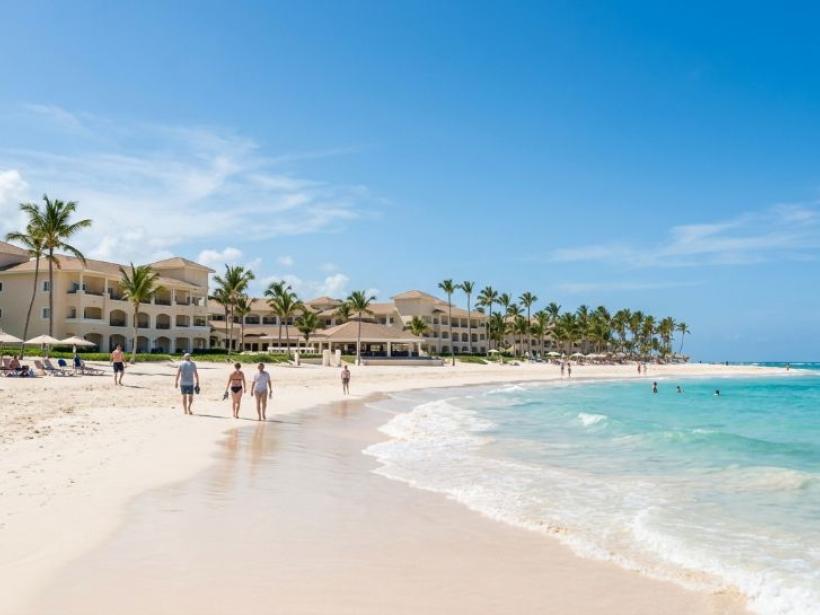

The Dominican Republic is rated Level 2, "exercise increased caution," for Americans because of crime (US State Department, 2025). Millions of Americans still go every year, mostly to resort areas like Punta Cana. The risks that matter most are crime outside tourist areas, dangerous roads, and medical bills that US insurance usually won't cover.
Key takeaways
- The US advisory has been Level 2 since June 12, 2025, with crime as the only listed risk.
- Tourist areas have more police, including a dedicated tourist police force, POLITUR.
- The State Department says the country's road death rate, 65.2 per 100,000 people, is the highest in the world.
- Most private hospitals want payment upfront and won't take US insurance, so get travel insurance before you go.
What does the US travel advisory say?
It's Level 2, and crime is the only risk flagged. The current version was issued on June 12, 2025. That update changed the summary, not the level.
The wording is blunt. Violent crime is a concern despite more police in tourist areas, the State Department says. It lists robbery, homicide and sexual assault, and it notes that criminals are rarely caught and prosecuted (US State Department, 2025).
There's another side to that. Tourist areas are policed more heavily than cities or rural areas. Visitors can call 911, contact the tourist police (POLITUR), and rely on private security at resorts.
Is it safe to travel to the Dominican Republic right now?
For most visitors, yes. The official advice hasn't changed in 2026, and more people are visiting than ever.
From January to July 2026, 7,700,118 people visited, up 7% on the same period in 2025 (Caribbean Journal, 2026, citing the Ministry of Tourism). Americans are the largest group. From January to October 2025, 3,730,852 nonresident air travelers came from the US, making up 52% of international arrivals (TravelPulse, 2025).
A quick calculation shows the scale: 3,730,852 ÷ 0.52 ≈ 7.2 million international air arrivals in those ten months. Visitor numbers don't prove safety. They do show how normal a trip here is for Americans.
Right now, keep two things in mind. It's hurricane season, which runs from May through November, and heavy rain can cause flooding with no warning (US State Department, 2025). And resort emergencies do happen. In June 2026, a large fire at one resort forced almost 1,700 tourists to evacuate (AP News, 2026). When you check in, find your fire exits.
How safe is it to leave the resort?
It's riskier than staying in, but that's no reason to skip it. The State Department says security outside resort areas is unpredictable, especially at night.
What matters most is how you travel. Take two couples at the same Punta Cana resort who both want dinner in town (a hypothetical example). One books a taxi through the front desk. The other waves down a car at the gate. The first couple has a vetted ride both ways. The second has taken the kind of unregulated taxi the State Department tells visitors to avoid. Uber also works in many areas.
Once you're out, the advice is simple. Keep your phone out of sight on the street. Leave jewelry and expensive watches in the room. Go with a partner or a group when you can. If someone robs you, hand things over and don't fight back.
Is it safe for an American to travel to the Dominican Republic?
The advisory says violent crime affects all residents, whatever their nationality. But it also names risks that hit US visitors in particular.
Dating apps: US citizens have been robbed by people they met on dating apps (US State Department, 2025). Meet in public, and stay out of isolated places.
Checkpoints: Dominican authorities often run operations to remove Haitian migrants. Some US citizens have been mistaken for Haitian migrants and held for a while, and in rare cases assaulted. Carry your passport at all times, and contact the US Embassy immediately if you're detained.
Scams: these do target Americans, especially people over 65. Scammers pose as a romantic partner, police officer, lawyer, embassy official or relative in trouble. Before you wire money to anyone, call the US Embassy.
The risk most guides skip: the roads
In my view, the roads deserve more attention than any other risk here. The State Department says the country's road death rate is 65.2 per 100,000 people, the highest in the world (US State Department, 2025).
The advisory lists the hazards: cars without lights at night, animals on the road, missing manhole covers, deep potholes, motorcycles weaving through traffic, and drivers going the wrong way. After a serious crash, drivers are often held until a court rules, even if they weren't at fault.
The State Department suggests hiring a professional driver instead of renting a car. If you do rent, don't leave your passport with the company. Some rental companies have kept passports over unpaid bills or damage.
Medical care and health risks
Get travel insurance that covers medical care and evacuation. Most private hospitals want payment before treatment and don't accept US insurance, and Medicare and Medicaid don't work abroad (US State Department, 2025).
Some private clinics have held patients, or their passports, until bills were paid. That's illegal under Dominican law, and the US Embassy can help if it happens to you.
Think carefully about elective surgery. The State Department says many US citizens have had serious complications or died during or after cosmetic or other elective surgery in the Dominican Republic. If something goes wrong, your legal options are very limited.
For day-to-day health, stick to bottled water and ask for drinks without ice, since tap water isn't safe in many areas. Ambulances are unreliable in most of the country but better in Santo Domingo, Santiago, Punta Cana and Puerto Plata.
What women travelers should know
Rape and sexual assault have been reported, including at major resorts and hotels, and US citizens have been drugged with date rape drugs (US State Department, 2025).
The State Department's advice is practical. Don't drink alone or with people you've just met, and never leave a drink unattended. Stay away from quiet, remote parts of the resort. If staff make unwanted advances, report them to management or the police.
If the worst happens, expect a different process from the one in the US. Rape kits often aren't available until the next morning, and Dominican authorities must administer them. Victims have to ask for medication to prevent STDs and pregnancy.
Entry rules and emergency numbers
Entry is straightforward for US citizens. Your passport must be valid for six months from the date you arrive. You don't need a visa for stays of 30 days or less. You must fill out an online eTicket form for each entry and each exit. And enroll in the Smart Traveler Enrollment Program (STEP) so the embassy can reach you in an emergency.
Save these numbers before you land:
- 911 for emergencies. It works nationwide, except in some areas near the Haitian border.
- 809-222-2026 for POLITUR, the tourist police.
- 809-567-7775 for the US Embassy, after you've contacted local authorities.
FAQ
Is Punta Cana safe for American tourists?
Punta Cana is a major tourist area, and those are more heavily policed than cities. The Level 2 advice still applies, so book taxis through your hotel and watch your drinks.
Is it safe to travel to the Dominican Republic alone?
Many people do it, but the State Department recommends traveling with a partner or group when you can. That matters most at night and outside resort areas.
Can you drink the tap water in the Dominican Republic?
Not in many areas. Drink bottled water, and ask for drinks without ice.
Is it safe to travel to the Dominican Republic during hurricane season?
Storms and flooding can happen from May through November, so it's a real risk to plan for. Get travel insurance that covers weather delays, and enroll in STEP so you get alerts.
So, is it safe to travel to the Dominican Republic? For a resort vacation, the official answer is yes, with increased caution. The advisory is specific about what goes wrong, so you know where to focus.
Book transport through your hotel, keep an eye on your drink and your phone, and buy insurance that covers hospital care. Those steps cover the risks the State Department warns about most.
Before you book, enroll in STEP and read the full State Department advisory. It's updated when conditions change.