
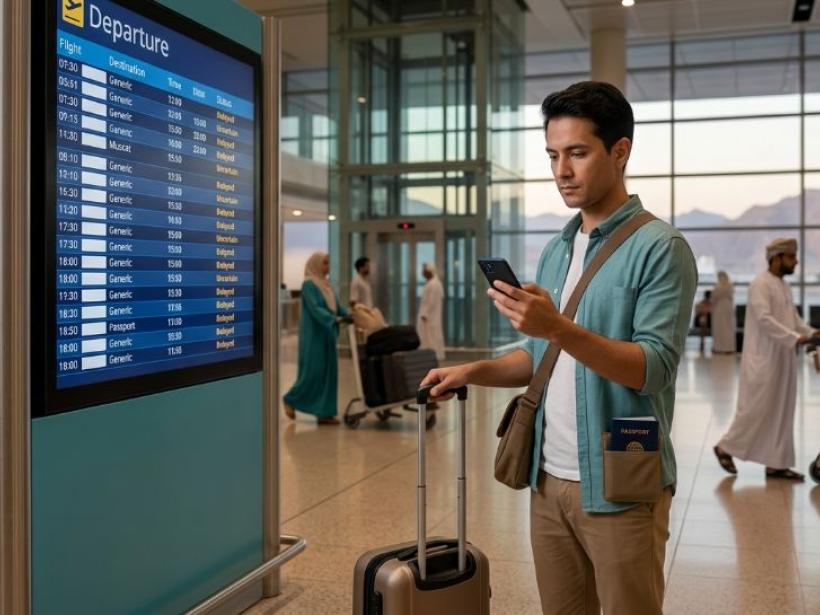

Oman is currently a Level 3 "Reconsider travel" destination for Americans, because of the risk of armed conflict and terrorism since US–Iran hostilities began on February 28, 2026 (US Embassy Muscat, 2026). That's not a ban, and flights from Muscat are running. But the risk is higher than usual, and it can change quickly.
Key takeaways
- The US advisory for Oman is Level 3. The Yemen border area is Level 4, "Do not travel."
- The latest US update, on August 30, 2026, kept Level 3 but allowed families of US government staff to return.
- Since March 1, 2026, drone and missile strikes have hit ports and industrial sites in Oman, including Duqm, Salalah and Sohar.
- Australia also says to reconsider travel. Canada advises against non-essential travel.
What does the US travel advisory say about Oman?
All of Oman is at Level 3, "Reconsider travel," because of the risk of armed conflict and terrorism. Along the Yemen border, the advice is Level 4: don't go (US Embassy Muscat, 2026).
The advisory names two main threats. One is the continuing risk of drone and missile attacks from Iran. The other is terrorism. The State Department says attacks could come with little or no warning, especially around holidays. It lists tourist sites, markets, malls, transport hubs and places foreigners visit among the possible targets.
The August 30 update made one change. Families of US government staff, who were ordered out in March, can now return. My reading is that things have calmed somewhat. Even so, the State Department still judges the risk high enough to keep Oman at Level 3.
Is it safe to travel to Oman at the moment?
It's riskier than normal. The US says to reconsider travel. Australia gives the same advice in its update from September 2, 2026 (Smartraveller, 2026). According to Wego's summary, Canada advises against non-essential travel (Wego, 2026). I couldn't confirm the UK's current advice, so British travelers should check GOV.UK.
Australia's update shows how fast this can move. It mentions military strikes and reprisal attacks across parts of the region "in recent days." It also warns that the conflict could escalate, including attacks on infrastructure.
On September 19, the US Embassy warned that the region's security situation was still complex and could escalate without warning. It pointed to attacks by Iran-backed Houthi forces on Saudi Arabia, including on civilian airports.
Has Oman been attacked?
Yes. On March 1, 2026, two drones hit the port of Duqm and injured one worker. It was the first reported strike on Omani soil (Argus Media, 2026). Two days later, drones hit a fuel storage tank at the same port, with no injuries (Anadolu Agency, 2026).
Strikes have since been reported at the ports of Duqm and Salalah, and at ports and industrial areas in Sohar, Bukha and Mina Al Fahal. Wikipedia's summary of news reports puts the toll at 14 killed and 35 injured. I couldn't check those totals against official Omani figures.
The reported targets have mostly been ports, energy sites and places linked to US operations, not hotels or tourist areas. That helps explain the pattern, but it isn't a guarantee. Terrorism is a separate risk, and the State Department still lists tourist locations as possible targets.
Are flights to Muscat running?
Yes, but check your own flight. In early September, Wego reported that Oman Air had published service to London Heathrow, and SalamAir started a new route on September 3 (Wego, 2026).
Published flights can still be dropped. The US Embassy's August 1 alert said some airlines in the region had delayed restarting routes, and others had canceled them. It told Americans in the region to consider leaving, or to be ready to leave if things got worse.
Take someone connecting through Muscat to India with a two-hour layover (a hypothetical example). If the airspace closes for an afternoon, that connection is gone, and rebooking may not be easy. A longer layover and a flexible ticket won't stop a closure, but they'll make the day far easier to recover from.
Is it safe to travel to Oman alone?
I didn't find any official advice that treats solo travelers differently. Level 3 applies to everyone. I also couldn't find a reliable, current source on everyday crime in Oman, so I can't say how the streets compare for someone on their own right now.
Traveling alone makes you more dependent on your own planning. If a flight is canceled at 2 a.m., nobody else is watching the news or rebooking for you. The US Embassy's advice helps here. Keep your phone charged and your emergency numbers saved. Check in with someone at home each day. Keep your passport where you can reach it fast.
If I were going alone, I'd book refundable places to stay and add a spare day at each end of the trip.
What Americans should do differently
Keep a low profile. The US Embassy says US diplomatic facilities have been targeted, including outside the Middle East. It also warns that Iran and groups that support it may target places connected with the US and Americans (US Embassy Muscat, 2026). In practice, stay alert around US-branded businesses and institutions.
Have your own way out. The advisory tells travelers to plan an exit that doesn't rely on help from the US government. That's worth taking seriously. If commercial flights stop, don't assume a government evacuation flight will replace them.
Before you go, enroll in the Smart Traveler Enrollment Program (STEP). It sends you embassy alerts and helps the embassy find you in an emergency.
What to do during an aerial attack
Do what local authorities tell you first. The US and Australian governments also give simple steps for the moment itself.
Stay away from windows, glass doors and any fallen debris (US Embassy Muscat, 2026). Get to an enclosed shelter. If there isn't one, find a room inside the building with no windows (Smartraveller, 2026). The rest of the time, avoid military sites, government buildings and energy facilities. Australia warns that military sites aren't always marked.
Weather risks by season
There's another thing to plan for besides the conflict: the weather. From June to September, temperatures can reach 50°C (about 122°F), and dehydration is common. The monsoon season falls in the same months and can bring flooding and sometimes cyclones. From October to May, sand and dust storms are the main concern (Smartraveller, 2026).
FAQ
Is it safe to travel to Oman now if I'm only transiting through Muscat?
A layover carries the same risk of cancellations and airspace closures. Allow a long connection, and check your flight directly with the airline on the day.
Is Muscat safe right now?
The US Level 3 advice covers all of Oman, including Muscat. The reported strikes have mostly hit ports and industrial sites, but the State Department warns that things can change quickly.
Will my travel insurance cover a trip to Oman?
I can't confirm this for any policy. Many policies exclude war or places under government travel warnings, so get the insurer's answer in writing before you book.
When was the Oman travel advisory last updated?
The US advisory was last updated on August 30, 2026, and it stayed at Level 3. The embassy issued further security alerts on September 1 and September 19.
So, is it safe to travel to Oman right now? It's riskier than usual, and the US and Australia both ask you to think carefully before going. That's worth taking at face value.
If you decide to go anyway, I think travel disruption is the problem you're most likely to face. Buy flexible tickets, make sure your insurance actually covers Oman, and have a plan to get home that doesn't depend on anyone else.
Before you book, enroll in STEP and check the US Embassy Muscat alerts page the week you travel.