
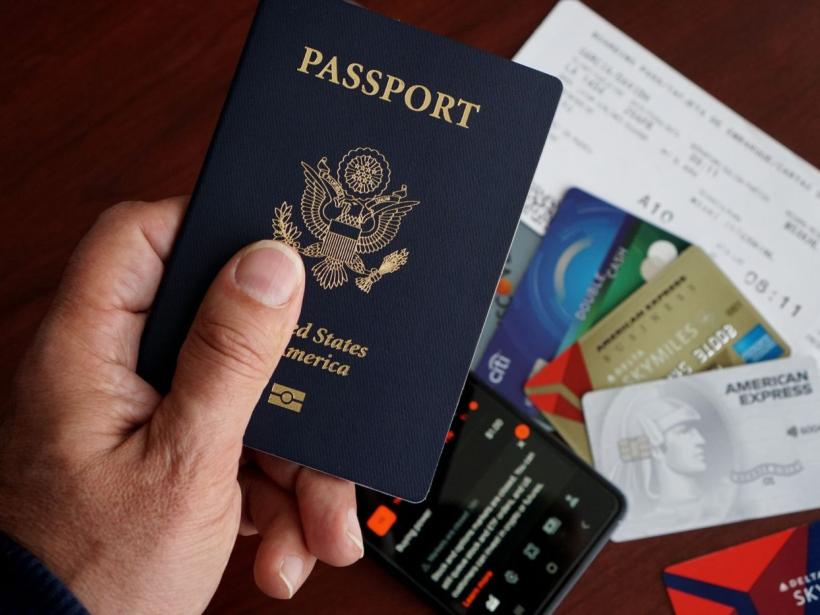
Which passport do I need for the United States?
You need a passport that is valid for at least six months beyond your planned date of departure from the United States. This is a general rule for visitors travelling under the Visa Waiver Program, and airlines often check it before you board. If your passport expires sooner, renew it before booking anything.
The passport type decides whether you can use the Visa Waiver Program at all. Only a biometric or e-passport qualifies, and the passport must be issued by a country that is a member of the programme. An emergency or temporary passport usually does not qualify, so check the cover for the electronic chip symbol before you apply for an ESTA.
- Check that the passport is valid for six months past your departure date.
- Confirm the passport is biometric, with the chip symbol on the cover.
- Make sure the passport was issued by a Visa Waiver Program country.
- Keep at least two blank pages for entry and exit stamps.
- Book travel under the exact name printed in the passport.
Do I need a visa or an ESTA?
You need an ESTA if you hold a passport from a Visa Waiver Program country, and you need a B1/B2 visa if you do not. The ESTA is an online authorization tied to one passport, while the visa is a sticker placed in your passport after an interview at a US embassy or consulate.
The Visa Waiver Program covers most European Union countries, the United Kingdom, Australia, New Zealand, Japan and South Korea. A passport from one of these countries is not enough on its own. You must also travel for tourism, business meetings or transit for no more than 90 days, hold a return or onward ticket, and not have travelled to Iran, Iraq, Syria, Sudan, North Korea, Libya, Somalia or Yemen since 2011.
The ESTA application asks for your passport details, contact address in the United States, employment information and answers to security questions. It costs a small fee, is usually approved within 72 hours, and stays valid for two years or until your passport expires. The B1/B2 visa requires a DS-160 form, a passport photo, an interview appointment and biometrics, and the process can take weeks or months depending on the consulate.
- Check your passport country against the official Visa Waiver Program list before anything else.
- Apply for ESTA at least 72 hours before departure, not at the airport.
- Confirm that your passport is biometric or electronic if you travel under the Visa Waiver Program.
- Keep the ESTA approval number with your travel documents.
- Book a visa interview early if you need B1/B2, as appointment waits vary by consulate.
What is the full document checklist for a US trip?
Carry these documents in your hand luggage, not in checked baggage. Border officers may ask for any of them at the port of entry, and a copy on your phone is not a substitute for the original.
- A passport valid for at least six months beyond your planned departure, with one blank page for the entry stamp.
- A printed ESTA approval or a visa in the passport, matching the passport number exactly.
- Return or onward tickets showing the date you leave the United States.
- Accommodation bookings for the first nights, with the address and phone number of the hotel or host.
- Medical insurance policy with the emergency number and coverage limits on the confirmation page.
- Bank statements or a card limit letter showing you can cover the stay, plus a printed itinerary.
Keep one folder with paper copies and a second set scanned into your email. Officers at the border decide how much to check, so a complete folder shortens the conversation.
How far in advance should I apply?
Start with the ESTA if you travel under the Visa Waiver Program, since approval usually arrives within 72 hours, yet US Customs and Border Protection advises applying at least 72 hours before departure. A visa interview takes longest: wait times at consulates vary by post and season, so book the slot as soon as your trip has dates and expect several weeks between booking and the interview itself.
Book flights and hotels only after the visa is in your passport or the ESTA is approved. Refundable fares cost more, but they protect you if the consulate asks for extra documents or the interview date slips. Keep the booking confirmations, since border officers may ask to see them.
- Apply for ESTA at least 72 hours before departure, ideally two weeks ahead.
- Book the visa interview slot as soon as travel dates are fixed.
- Allow several weeks between the interview and passport return.
- Buy flights and hotels after approval, or choose refundable rates.
- Check your passport expiry before booking anything.
What do I show at the border?
A US Customs and Border Protection officer at the passport desk may ask for your passport, your return or onward ticket and the address where you will stay. Keep those three items in one folder you can reach without opening your suitcase.
Answer questions briefly and match the dates to your booking. If you carry a printed copy of the hotel confirmation and the flight itinerary, you avoid unlocking your phone at the counter, which officers may ask you to do anyway.
- Keep your passport open at the photo page.
- Hold the return or onward ticket within reach.
- Write the first night's address on paper as a backup.
- Keep the ESTA approval or visa page in the same folder.
- Carry proof of funds only if an officer asks for it.
Does travel insurance cover US medical costs?
Yes, if the policy includes emergency medical treatment and evacuation, and most travel policies sold for US trips do. US hospital bills are the reason to buy it. A single emergency room visit or an overnight stay can run into tens of thousands of dollars, and your home health insurance rarely pays abroad. The US has no public healthcare system for visitors, so you settle the bill yourself and claim it back later.
Check four things before you pay for a policy. Emergency medical expenses should cover at least the cost of a serious hospital stay, not just a clinic visit. Medical evacuation must bring you home or to a suitable hospital, since an air ambulance across the Atlantic is the single most expensive item. The policy needs a 24-hour assistance line and, where possible, direct billing with US hospitals, so reception does not ask you for a deposit. Pre-existing conditions are excluded unless you declare them and buy the cover that includes them.
- Emergency treatment and hospital stays, with a limit high enough for a US admission.
- Medical evacuation and repatriation, including air ambulance.
- A 24-hour assistance number the hospital can call.
- Declared pre-existing conditions, if you have any.
- Cover for the whole trip, from the day you leave to the day you land back.
What are the most common document mistakes?
An expired ESTA and a name that does not match the passport are the two errors that most often stop a US trip at the gate. Both are avoidable with one careful check a few days before departure.
ESTA approvals last two years, so a traveller who visited in 2024 may assume the authorisation still holds in 2026. It may not. Enter the passport number and expiry exactly as printed, with no middle name added if the passport omits it. A one-way ticket without a return or onward booking raises questions at the border, and a missing address leaves the arrival form incomplete.
- Check the ESTA status and expiry date before every trip, not once.
- Match the name, date of birth and passport number to the passport character by character.
- Carry a return or onward ticket, even when the plan is open-ended.
- Write down the full address of your first night, including the zip code.
- Keep a printed copy of the ESTA approval and the booking confirmations.
Frequently asked questions
Can I enter the United States with an ESTA alone?
No. ESTA is a travel authorization, not a visa, and it only works together with a passport from a Visa Waiver Program country. You still need return tickets, an address where you will stay and, if asked, proof that you can fund the trip.
How long is an ESTA valid?
An approved ESTA is normally valid for two years, or until your passport expires, whichever comes first. Each stay under the program is limited to 90 days, and you should check the authorization status before every trip.
Do children need their own documents?
Yes. Every traveller, including infants, needs a separate passport and a separate ESTA or visa. If one parent travels alone with a child, carry the other parent's written consent in case border officers ask for it.
What happens if my documents are incomplete at the border?
A border officer can refuse entry if the purpose of the trip or the return plan is unclear. Keep return tickets, hotel bookings and insurance in one folder, printed or saved offline on your phone, so you can show them on request.
Photo: DΛVΞ GΛRCIΛ, Pexels (Pexels License)