
What ages does the kids' club actually cater to?
Most Turkish resort kids' clubs split children into three or four distinct age brackets, each with its own schedule and staff. A club that dumps everyone from 4 to 12 into one room rarely holds a child's attention for more than a day. The best-run programs treat a toddler, a seven-year-old, and an eleven-year-old as different guests.
- A supervised creche or baby room for infants under 3 keeps a quiet nap area, soft play mats, and a strict nappy-changing routine. Staff ratios here matter more than anywhere else.
- The 4 to 7 group runs on short, high-energy bursts: face painting, treasure hunts, mini disco practice, and simple pool games under constant lifeguard watch.
- Children aged 8 to 12 get more independence with structured crafts, archery, water polo, and evening movie nights. This is the bracket where a tired parent notices the difference between a trained animator and a bored intern.
- Teen programs, where they exist, ditch the club room entirely. Expect guided kayak trips, beach volleyball tournaments, or a dedicated lounge with a PlayStation and a staff member who actually knows how to keep fifteen-year-olds from drifting off to the pool bar.
A single all-ages session usually defaults to the youngest child's pace, so older kids check out mentally while the little ones get overstimulated. Before you book, ask the hotel to name the exact age cutoffs for each group and the maximum number of children per staff member.
What does 'family-friendly dining' really mean?
A practical family setup goes beyond chicken nuggets on the adult buffet. The core feature is a dedicated kids' buffet section set at a low counter height. You should find plain, unseasoned proteins, steamed vegetables, simple pasta, and fresh fruit, with no sauces mixed in and all dishes clearly labeled.
Early dinner hours, typically starting at 18:00 or 18:30, prevent the meltdown that comes with waiting for a 19:30 service. Confirm that the main restaurant provides sturdy high chairs with working straps, not just booster seats. A microwave and a blender station you can use without asking staff let you heat bottles or puree your own food at any time.
- A separate low-level buffet with plain, unseasoned options and clear ingredient labels
- Early kids' dinner service starting by 18:30 at the latest
- Sturdy high chairs with functional safety straps, not just boosters
- A publicly accessible microwave and blender station for pureeing and heating
- Prepared dairy-free, gluten-free, and nut-free meals available on request without 24-hour notice
- Supervised snack times in the kids' club to cover the gap between lunch and dinner
How do I check pool and beach safety before booking?
To verify water safety from a distance, look past the marketing photos and read between the lines of recent guest reviews. Official hotel websites rarely mention lifeguard schedules or barrier heights. Collect clues from traveler photos and ask direct questions before you commit.
Photos taken by guests often reveal more than the resort’s curated gallery. Scan for these details in photos tagged with the pool or beach, and cross-check them with comments from families who visited in the same month you plan to travel.
- Look for a continuous fence at least 120 cm tall separating the children’s pool from the main pool, with a self-closing gate visible in the background.
- Check whether pool depth markers are printed clearly on the coping or deck in large numerals, not only on a distant sign.
- Search reviews for the phrase “lifeguard” and note whether guests mention a guard on a raised chair during the hours you would use the pool.
- Examine beach photos for a gentle slope into the water, with no sudden drop-off visible within the first five meters of shoreline.
- Filter reviews by “traveling with baby” and read whether parents mention sunshade coverage directly over the shallow wading area.
- Ask the hotel by email whether pool drains meet the European EN 13451 standard for anti-entrapment covers, and request a photo if the answer is vague.
Which room layout actually works for a family?
Floor plans in Turkish resorts fall into three types, and the right choice depends on your children's ages and your evening routine. Connecting rooms give you a proper door between two separate bedrooms. This setup suits light sleepers and parents who want to read or talk on the balcony after the children go to bed. You close the door, and both sides get quiet.
Family suites with a solid partition or a sliding wall keep everyone in one unit but define a sleeping zone for children. The partition cuts noise and light, so a toddler can nap while you move around the main area. Open-plan layouts place beds or a sofa bed in the same room with no barrier. They work for families with one infant or older children who stay up with you, but they offer no separation for an early bedtime.
Before you book, confirm the actual layout with the hotel. Photos can mislead. Ask whether the partition is a full wall or a glass panel with a curtain, and whether the children's area has its own television and climate control. A balcony shared between rooms is common in connecting layouts, while a family suite typically gives you one larger balcony.
How do Antalya and Bodrum family hotels compare?
Antalya’s Lara and Belek strips are dominated by large all-inclusive resorts where everything is on site. You get multiple pools, water slides, and kids’ clubs split into several age groups, all behind a single security gate. The beaches are wide, sandy, and slope gently into the sea, which makes paddling safer for small children. The trade-off is that you are unlikely to leave the resort; the surrounding area offers little within walking distance.
Bodrum’s family hotels are generally smaller, often built into hillsides with tiered terraces leading down to a narrow beach or a wooden jetty. The coastline is more rugged and the water gets deep faster, so a hotel with a shallow dedicated kids’ pool matters more here. The advantage is location: many family-run boutique hotels sit close to town centres like Yalikavak or Gumbet, making a stroll to a restaurant or a playground a realistic part of the day rather than an excursion.
- Beach type: Antalya offers long sandy stretches with a gradual entry; Bodrum has smaller pebbly coves and deeper water close to shore.
- Resort scale: Antalya properties often exceed 400 rooms with extensive on-site entertainment; Bodrum hotels tend to be under 100 rooms with a calmer atmosphere.
- Kids’ facilities: Antalya clubs typically run full-day programs split by age bracket; Bodrum clubs are smaller and may operate only in high season mornings.
- Getting around: Bodrum places you within walking distance or a short dolmus ride of town centres; Antalya resorts are self-contained and require a taxi or a tour bus for any outing.
- Dining variety: Antalya all-inclusives run multiple buffet and a la carte venues; Bodrum hotels may offer half-board, encouraging you to eat out locally several times a week.
Pick Antalya if the resort itself is the whole holiday and you want maximum facilities without leaving the grounds. Choose Bodrum if you prefer mixing resort time with walks into town and a more compact, less crowded setting.
Which hotel chains consistently deliver for families?
Rixos Hotels is a Turkish chain with a clear family policy. Their properties in Antalya and Bodrum run supervised clubs split into age groups, so a four-year-old and a ten-year-old are not stuck in the same room. The all-inclusive plan includes branded baby food stations and evening entertainment that is loud enough for children but does not take over the whole resort.
Club Med operates its Bodrum Palmiye village with a structure many parents find predictable and therefore relaxing. The Petit Club takes children from age two, which is rare, and the G.O. team runs sailing and trapeze sessions for teenagers. Hilton’s family-focused resorts, often flagged as Hilton Dalaman Sarıgerme or Hilton Bodrum Türkbükü, provide connecting rooms and a dedicated pool zone with a lifeguard on duty. Voyage Hotels, a Turkish brand, builds large water parks inside its grounds and keeps a nurse on call around the clock.
- Rixos: age-split kids’ clubs and baby food corners included in the all-inclusive rate.
- Club Med: childcare from age two, plus structured sports programs for teens.
- Hilton: guaranteed connecting rooms and lifeguarded children’s pool areas.
- Voyage: on-site water parks and 24-hour nurse access.
- Barut Hotels: quiet family blocks with early dinner sittings and a separate shallow pool.
- TUI Magic Life: pushchair-friendly paths, a baby lounge with bottle warmers, and evening shows that finish by 10 p.m.
What questions should I email the hotel before I book?
A short email with specific questions turns a vague listing into a clear plan. You get written confirmation of the details that matter most for your family, which also helps if something is not as promised on arrival. Stick to the facts that are rarely updated on third-party booking sites.
Ask about the children's facilities and your room location directly. The answers will tell you whether the hotel suits your children's ages and your need for quiet evenings. Here is a checklist to copy and adapt:
- What are the exact opening hours of the kids' club each day, and which age groups are accepted without a parent present?
- Are the children's pools heated during the last week of April and the first week of October, and what water temperature do you maintain?
- What first-aid certification and child-care qualifications do the babysitters hold, and how far in advance must we book them?
- Can you confirm that our family room is on the ground floor or in a building away from the evening stage, and what is the walking time to the main restaurant?
- Do you provide a steriliser, a bottle warmer and a proper cot with a firm mattress, or should we bring our own?
- Is the beach entry sandy and gradual for at least the first ten metres, and are there any rocky patches or sudden drop-offs marked?
Frequently asked questions
Is an all-inclusive resort always the best choice with kids?
Not always. All-inclusive removes the daily stress of finding meals and paying for snacks, which helps with younger children. With older kids who want to explore, a half-board or B&B option in a walkable area can give you more flexibility and better local food.
What is the minimum age for a kids' club in Turkish hotels?
Most resort kids' clubs accept children from age 4, and some take babies from 12 months with advance notice. A few offer a baby lounge where you stay and play together. Always confirm the minimum age and staff-to-child ratio by email, as it varies even within the same chain.
Do Turkish family hotels provide babysitting services?
Many larger resorts offer in-room babysitting for an hourly fee, usually with a minimum booking of two or three hours. Ask whether sitters hold a first-aid certificate and whether the service is outsourced or managed by the hotel directly. Smaller boutique hotels may only recommend an external agency.
When is the best time to visit Turkey with children?
May, June, and September give you reliably warm weather without the intense July and August heat. The sea is warmest in September. Outside of school holidays, kids' clubs are quieter and pools are less crowded, which often means more individual attention for your child.
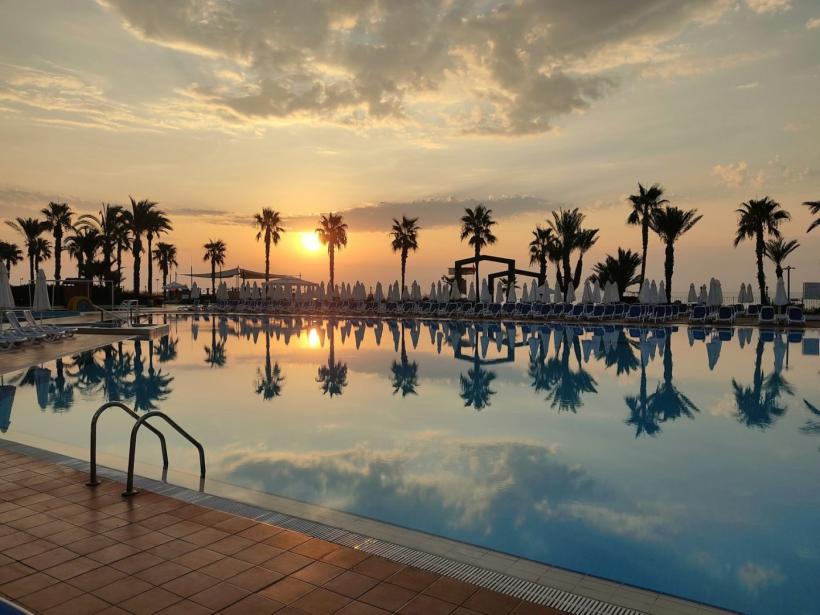
Photo: Nata Kay, Unsplash (Unsplash License)