
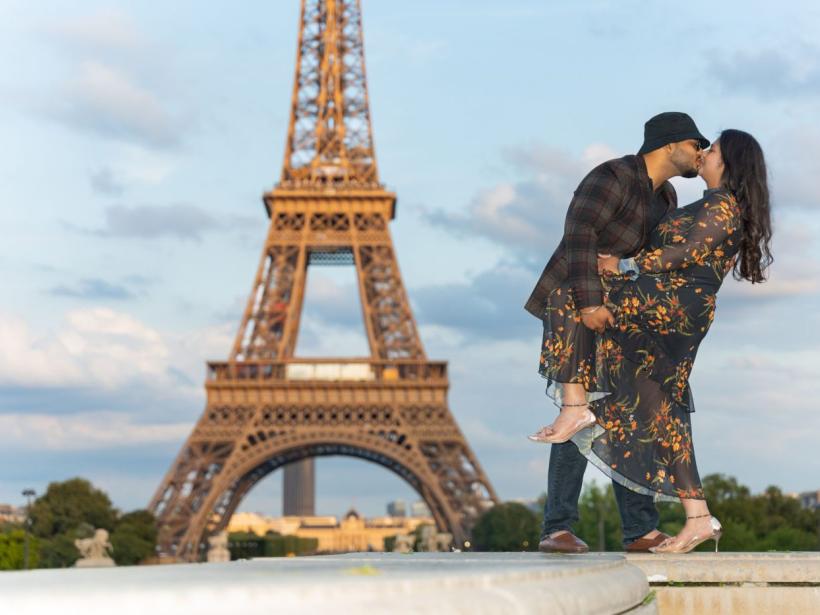
When is the best time for a romantic trip to Paris?
Late spring and early autumn give couples the best mix of comfortable weather and manageable crowds. May, June, September, and early October bring mild temperatures that make long walks and outdoor café sitting a pleasure rather than an endurance test. The golden light in these months, especially around sunset, softens the city's limestone facades and adds a natural warmth to photos and memories.
Summer brings long daylight hours and a lively energy, but the trade-offs are significant for a romantic escape. Metro cars and popular streets feel packed, and a table at a sought-after terrace often requires a reservation days ahead. If your dates must fall in July or August, book key dinners early and plan your walks for early morning, when the neighborhoods still belong to locals and the air is fresh.
Winter strips away the crowds and reveals a quieter, more intimate Paris. Rain is frequent rather than heavy, and temperatures hover a few degrees above freezing. The upside is a city of steamy café windows, uncrowded museums, and lower hotel rates. February, just before the first spring tourists arrive, is the sweet spot for couples who prioritize solitude over sunshine.
What does a realistic romantic weekend itinerary look like?
A Friday-to-Sunday trip works well if you pace it around one or two main stops each day, leaving room for long meals and unplanned walks. The Seine and the city's compact core let you move between neighborhoods on foot or with a short metro ride, so you spend less time in transit and more time together.
Friday evening starts with a sunset river walk from Pont Marie to Pont Neuf, then dinner at a classic bistro in Saint-Germain-des-Prés. Saturday morning, visit the Musée de l'Orangerie to see Monet's Water Lilies while the galleries are quiet, then cross the pedestrian Pont des Arts and wander the narrow streets of the Latin Quarter. A late lunch at a sidewalk crêperie breaks up the day before a twilight ascent of the Arc de Triomphe, where the views feel more intimate than the crowded Eiffel Tower platforms.
Keep Sunday slow. Pick up pastries and fruit at a covered market like Marché des Enfants Rouges, then spend the late morning in the hidden gardens of the Musée Rodin. A final lunch at a canal-side table in the 10th arrondissement gives you a calm, local close to the weekend before heading to the airport.
Which neighborhoods offer the most romantic atmosphere?
Montmartre suits couples who enjoy a village feel within the city. The narrow cobbled lanes behind Sacré-Cœur, particularly around rue de l’Abreuvoir and Place Dalida, stay quiet in the early morning before the day-trippers arrive. You can wander without a fixed route and still find a small courtyard or a view over the zinc rooftops.
Le Marais works well for a weekend built around food and independent shops. The streets between rue des Francs-Bourgeois and the Place des Vosges are lined with bakeries, wine bars and gardens tucked behind old mansion gates. It feels lived-in rather than staged, and the arcades of Place des Vosges give you a bench under the lime trees without a queue.
Saint-Germain-des-Prés leans toward classic Left Bank romance, the kind drawn from café terraces and jazz. Couples who linger over a single coffee at Les Deux Magots or walk along rue de Seine past the art galleries tend to find the rhythm here. The Luxembourg Gardens sit at its edge, with the Medici Fountain offering a shaded spot that rarely appears on fast itineraries.
The Latin Quarter suits a couple who enjoy a young, bookish energy. Rue Mouffetard and the streets around the Sorbonne stay animated into the evening, with open-air crepe stands and small English-language bookshops. The Arènes de Lutèce, a Roman amphitheatre hidden behind rue Monge, gives you a place to sit with a bottle of wine where most tourists never step.
- Montmartre for the village atmosphere and quiet morning streets behind Sacré-Cœur.
- Le Marais for food-focused walks and the arcades of Place des Vosges.
- Saint-Germain-des-Prés for café terraces, jazz and the Luxembourg Gardens.
- The Latin Quarter for student energy, rue Mouffetard and the hidden Arènes de Lutèce.
Where should we eat for a memorable date night?
Paris rewards those who skip the obvious set-menu tourist spots near the main monuments. A memorable evening often starts in a classic neighborhood bistro where the menu changes daily and the lighting stays low. Look for a handwritten chalkboard menu outside and a room filled with French voices, not a multilingual photo menu propped on the sidewalk. Book a table for 8:30 or 9:00 p.m. to dine alongside locals rather than the early international crowd.
Wine bars offer a more relaxed but equally intimate alternative. Many serve excellent small plates alongside natural and organic wines, often at a long zinc bar or a candlelit communal table. The 11th arrondissement and the northern edge of the Marais hold a dense cluster of these spots. A few places accept reservations online, but calling ahead in basic French almost always works better for securing a corner table.
- Choose a bistro with a short, handwritten menu that lists three or four starters and mains.
- Reserve for the second service around 9:00 p.m. to avoid pre-theater rush and early tourists.
- Seek out wine bars in the 11th arrondissement for natural wines and seasonal small plates.
- Call the restaurant directly instead of relying only on online booking platforms.
- Avoid any place with a plastic menu, food photos, or a greeter stationed at the door.
What are some unique date ideas beyond the Eiffel Tower?
Shared experiences away from the main sights often create the strongest memories. A sunset cruise on the Seine, for example, lets you see the illuminated landmarks from the water without the crowds on the embankments. Book a boat with a small upper deck, bring a jacket for the evening breeze, and skip the dinner cruises in favor of a simple wine glass on board.
Several low-key activities let you settle into the rhythm of the city together. You can learn to make croissants in a private baking class, watch a classic French film in a vintage cinema in the Latin Quarter, or pack a market lunch and head to a tucked-away garden.
- Take a dusk boat trip on the Canal Saint-Martin, passing under iron footbridges and tree-lined quays as the street lamps switch on.
- Book a small-group pastry or sauce-making class in a residential kitchen, where the instructor walks you through each step.
- Visit a historic cinema like Le Champo or Studio 28 for a subtitled classic and a post-film drink at the attached bar.
- Assemble a picnic from a covered market such as Marché des Enfants Rouges and spread it out in the hidden Jardin du Palais-Royal.
- Walk the elevated Coulée verte René-Dumont together, a planted promenade built on an old railway viaduct above the streets.
- Share a sketchpad and pencil on the upper floor of a quiet museum like Musée de Montmartre, drawing the view from the window.
How do we avoid crowds and tourist traps?
Book the first entry slot of the day for any major museum or monument. At the Louvre, the 9 a.m. Wednesday and Friday evening openings draw fewer visitors than weekend mornings. Pre-purchase timed tickets directly from the official venue website; third-party resellers often bundle unnecessary extras and charge a premium.
Walk two blocks away from any landmark and the crowds thin dramatically. The streets behind the Sacré-Cœur, such as rue de l'Abreuvoir and rue des Saules, offer the same village atmosphere without the crush of the main square. In the Latin Quarter, skip rue de la Huchette entirely and head uphill to rue Mouffetard for a working market street with wine bars and cheese shops frequented by residents.
Avoid restaurants with multilingual picture menus, waiters beckoning from doorways, or views of a famous monument. A reliable test: if the menu lists the same dishes in six languages, walk on. Instead, pick a spot on a quiet side street where the daily specials are written on a chalkboard in French only. Lunch remains the better value and a calmer experience than dinner at most Parisian bistros.
How should we budget for a romantic weekend in Paris?
A romantic weekend in Paris can be shaped around your budget, with the most significant costs being flights, accommodation, and dining. A tightly managed trip focuses on simple pleasures like picnics and walking, while a more comfortable budget allows for a hotel with a view and a Michelin-starred dinner. The city offers a clear range of experiences at every level, and knowing where to allocate your money makes the difference.
Accommodation is the single largest variable. A clean, well-located room in a 3-star hotel in a central neighborhood like the Latin Quarter keeps you close to the action without the premium of a river view. Moving up, a 4-star boutique hotel in Saint-Germain-des-Prés or Le Marais offers more space, design character, and a quieter street presence. At the top end, a palace hotel with a direct Eiffel Tower view and a spa provides the full Parisian romantic fantasy.
Dining costs follow a similar ladder. You can eat well on a modest budget by choosing set lunch menus at reputable bistros and picking up fresh bread, cheese, and wine from a local market for a Seine-side picnic. A memorable date night at a classic brasserie with oysters and champagne sits in the middle. For an unforgettable evening, a tasting menu at a gastronomic restaurant with paired wines represents the top of the range. Activities are the most flexible part of the budget; many of the most romantic experiences, such as walking the Promenade Plantée or exploring Montmartre at dawn, cost nothing at all.
Frequently asked questions
Is Paris still romantic if we avoid the main tourist spots?
Yes. The city's charm is strongest in its quiet corners: a cobbled alley in Le Marais, a bench in Square du Vert-Galant, or a simple café terrace at sunset. Skipping the packed landmarks often leads to the most personal and memorable moments together.
How far in advance should we book restaurants?
For popular dinner spots, especially on Friday and Saturday evenings, book two to four weeks ahead. Many Parisian bistros now use online reservation systems, which makes it simple. For lunch or a casual wine bar, you can often walk in without a booking.
What is the best way to get around as a couple?
Walking is the most romantic way to explore Paris. For longer distances, the metro is efficient and easy to use. On a nice day, renting city bikes or taking the bus lets you see the city above ground and discover streets you might otherwise miss.
Can we have a romantic experience on a tight budget?
Absolutely. Many of the best romantic moments cost nothing: a picnic with market finds along the Canal Saint-Martin, a free organ concert at a historic church, or simply wandering through the Tuileries Garden at golden hour. Focusing on one splurge, like a nice dinner, and keeping other activities simple works well.
Photo: amine photographe, Pexels (Pexels License)