
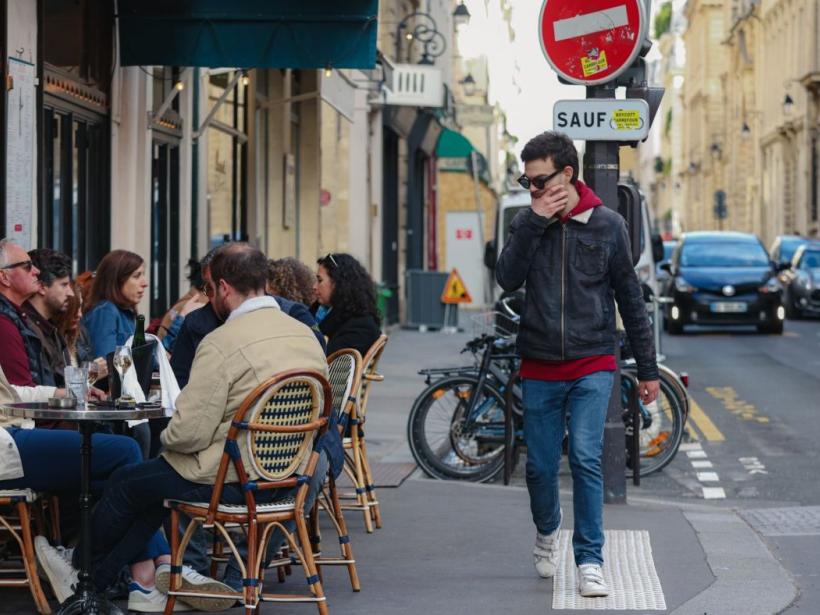
When is the cheapest time to visit France?
Flights and hotels are cheapest in the shoulder months of April, May, September and October. You avoid the summer crowds of July and August, and you still get mild weather in most regions. A midweek departure in late April or early October often costs half the peak summer fare.
Winter, from November to early March, has the fewest visitors outside the Christmas and New Year break. Paris museums are quieter, and rural gîtes drop their weekly rates. The trade-off is shorter days and chilly rain in the north, so pack a waterproof layer.
Watch for three price spikes: the February school holidays, Easter weekend, and the May bank holidays. Book a trip between these short windows to combine off-peak fares with the first warm café terraces of spring.
How do I find cheap flights and trains to France?
Being flexible with dates and airports makes the biggest difference to your ticket price. Budget airlines like Ryanair and easyJet run frequent sales, with the lowest fares typically available when you book 6 to 8 weeks ahead for short-haul routes. Set up price alerts on Google Flights or Skyscanner for your preferred route and be ready to book when the price drops.
Flying into a regional airport often costs half as much as landing at Charles de Gaulle. Beauvais, Carcassonne and Marseille Provence handle heavy budget traffic, and a FlixBus or BlaBlaBus connection from the airport to the city center keeps the total trip cost low. For train travel, SNCF releases Ouigo and TGV INOUI tickets four months in advance. The earlier you book, the more likely you are to grab a fixed-rate Prem's fare that cannot be refunded but saves you a substantial amount.
- Search flights in an incognito browser window to avoid price hikes based on repeated queries.
- Compare nearby departure airports: flying from a smaller hub can save you money even after factoring in ground transport to get there.
- Book SNCF trains as soon as tickets go on sale, roughly four months before travel, to secure the lowest fixed fares.
- Check Ouigo trains for intercity routes: tickets start at a flat rate and children under 12 travel for a set low fee.
- Use FlixBus or BlaBlaBus for overnight routes to save on both transport and a night of accommodation.
- Sign up for budget airline newsletters so you hear about flash sales the day they launch.
What are the best ways to save on accommodation?
Stay slightly outside the main city center to cut lodging costs noticeably while staying connected by public transport. In Paris, neighborhoods like Montreuil or the 13th arrondissement offer rooms for a fraction of the price in the Marais, and a single metro ticket gets you to the sights in 20 minutes. The same pattern holds in Lyon, Bordeaux, and Nice: a tram or bus ride replaces the premium you pay for a central postcode.
Aparthotels and rooms rented through local platforms give you a kitchen, which directly reduces your food spending. Booking a private room in a host family's apartment often costs less than a budget hotel and includes a more authentic neighborhood experience. Hostels in France have moved well past dormitory basics. Many now offer private double rooms with shared bathrooms at rates well below a standard hotel.
Loyalty programs from major hotel chains let you accumulate points on stays you would book anyway. Those points often cover a free night after four or five paid nights during off-peak travel. Combine this with last-minute booking apps that unload unsold rooms. You can land a three-star property for the price of a hostel bed, especially on Sunday through Thursday nights.
- Book a private room in a host family's apartment for lower rates and kitchen access.
- Choose an aparthotel on the edge of the city center and cook breakfast and one main meal yourself.
- Look at hostels with private double rooms, not just dorms, for hotel comfort at half the cost.
- Join a chain loyalty program and use points for free nights during shoulder season.
- Check last-minute booking apps on Sunday through Thursday for unsold hotel inventory.
- Stay one or two metro stops outside the tourist core and pocket the difference.
How can I eat well in France on a budget?
The fixed-price lunch menu, or formule déjeuner, is the most reliable way to get a quality meal. Most restaurants offer a two- or three-course set menu at midday that costs a fraction of the evening price. You will often get a starter and main or main and dessert with a glass of wine for a set amount, and the cooking is the same kitchen that charges much more after dark. Make lunch your main meal and switch to a lighter picnic-style dinner.
Shop at the weekly open-air markets for cheese, cured meats, seasonal fruit and fresh bread. A baguette from a proper boulangerie, a wedge of local cheese and tomatoes bought from a market stall make a meal that feels like a luxury without the restaurant bill. Bakeries also sell quiches, savoury tarts and sandwiches that work for a quick breakfast or lunch on a bench. If your rental has a small kitchen, cooking a simple dinner with market ingredients cuts food costs sharply.
- Order the formule at lunch, not the full à la carte menu. The same dishes often appear on both.
- Ask for a carafe d'eau. French law requires restaurants to serve free tap water with a meal, and you never need to buy bottled water.
- Buy wine, cheese and charcuterie at a caviste or market instead of ordering them in a restaurant, where the markup is steep.
- Look for traiteurs, high-end delis that sell prepared dishes by weight. You get restaurant-quality coq au vin or gratins to heat at home.
- University restaurants called Restos U in larger towns serve complete meals for a flat, low rate and are open to everyone, not just students.
Which museums and attractions are free or discounted?
Many national museums in France open their doors for free on the first Sunday of each month. The scheme covers iconic places like the Musée d'Orsay and the Centre Pompidou, though you should still book a timed entry slot online in advance. The Louvre offers free entry on the first Friday of the month after 6 p.m. for all visitors, not just EU residents.
Several excellent museums remain free all year round. The Petit Palais houses a fine arts collection in a Beaux-Arts building and charges no admission for its permanent exhibitions. The Musée Carnavalet, dedicated to the history of Paris, and the Maison de Victor Hugo on Place des Vosges also have no entry fee.
A Paris Museum Pass makes financial sense if you plan to visit four or more paid attractions over two days. The pass covers over 50 museums and monuments and lets you skip the ticket line at most sites. Outside the capital, city tourist cards in Lyon, Bordeaux and Marseille bundle public transport with museum entry and often pay for themselves after two major visits.
- National museums are free on the first Sunday of each month; reserve a timed slot beforehand.
- The Petit Palais, Musée Carnavalet and Maison de Victor Hugo offer free permanent collections every day.
- The Louvre is free for everyone on the first Friday of the month from 6 p.m. onward.
- EU residents under 26 get free entry to national museums year-round with a valid ID.
- A 2-day Paris Museum Pass breaks even after about four paid attractions and includes priority access.
- City tourist cards in Lyon, Bordeaux and Marseille combine transport with museum discounts.
How do I get around French cities cheaply?
Most French cities sell multi-day transport passes that cut the per-ride cost sharply. A Paris Navigo Easy card loaded with a pack of ten tickets costs less per trip than buying singles, and a weekly Navigo pass pays for itself after about four round trips a day. Lyon, Bordeaux and Lille have similar city passes that cover buses, trams and the metro for 24, 48 or 72 hours.
Bike-share schemes are often the cheapest option for short hops. Vélib’ in Paris and VélôToulouse cost a few euros for a day pass, with the first 30 minutes of each ride included. You can string together free half-hour rides all day by docking the bike and taking a new one. Walking is free, and compact city centers like Strasbourg, Nice and Aix-en-Provence are best explored on foot.
For a group of three or four, a rental car can beat train tickets on regional trips. French toll roads add cost, but splitting fuel and a small hatchback’s rental fee often comes out cheaper than four individual TGV or Intercités fares, especially when you book the car well ahead and avoid airport pickup surcharges.
What free or low-cost activities work outside Paris?
Regional France rewards travellers who step away from the ticket booth. Hiking trails crisscross every department, from the calanques near Marseille to Alpine pastures above Chamonix, and they cost nothing to walk. Local tourist offices hand out free route maps with distance and difficulty marked clearly.
Village markets turn a simple grocery run into a morning out. You can taste samples of cheese and saucisson while watching the square come to life, then buy bread and fruit for a picnic that beats any prix-fixe lunch. Coastal towns add free beach days and cliff walks, often with summer music festivals where entry is just showing up.
- Walk a section of a GR long-distance trail using free IGN maps from the local mairie.
- Join a village brocante or vide-grenier for the atmosphere, not the shopping.
- Visit a vineyard that offers free cellar tours without a booking fee, common in Alsace and the Loire.
- Time your trip for a Fête de la Musique on 21 June, when every town fills with free live music.
- Explore a regional natural park on marked cycling routes you can ride with a rented bike.
- Attend a harvest festival in autumn where tastings and processions are open to everyone.
Frequently asked questions
Is France really expensive for tourists?
It can be, but you control most of the costs. Choosing the right season, eating where locals eat and using free museum days can bring a daily budget close to what you would spend in many other European countries.
Do I need to tip in French restaurants?
Service is included in the price by law, so tipping is not required. Leaving a small coin or rounding up the bill is appreciated but never expected.
Can I drink tap water in France?
Tap water is safe to drink everywhere. In restaurants you can ask for a carafe d'eau (a jug of tap water) free of charge instead of ordering bottled water.
Are there discounts for families or young people?
Many museums and transport networks offer reduced fares for children, students and people under 26. Carry a student ID or passport to prove your age, especially for EU resident discounts.
Photo: TBD Traveller, Pexels (Pexels License)