
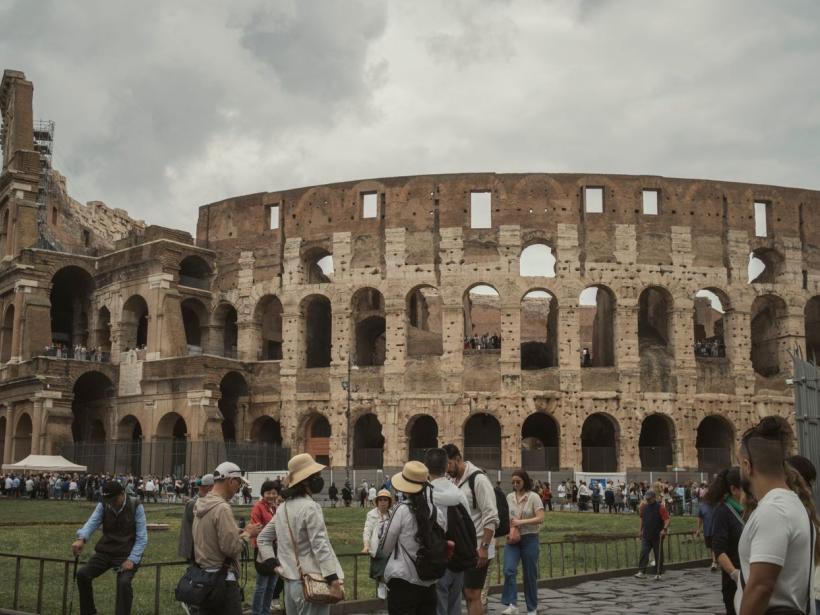
What is the single best city for a first trip to Italy?
Rome gives you the most complete introduction to Italy in one place. The city packs nearly three millennia of history into a walkable historic core. You can walk from the Colosseum and Roman Forum to the Vatican and Baroque piazzas, moving through distinct eras in a single afternoon. Fiumicino airport handles direct flights from most major cities, and the train station at Termini puts day trips to Florence, Naples, or the hill towns of Lazio within easy reach.
A first-time visitor can cover the essential sights in three full days without feeling rushed. The central area between Piazza Navona, the Pantheon, and Trastevere works well as a base because you can walk to the Forum and the Vatican in under 30 minutes. Public transport fills the gaps when your feet need a rest, though the metro network is limited compared to other European capitals. Rome also handles crowds more gracefully than Venice or the Amalfi Coast villages, which feel overwhelmed even in the shoulder season.
For a first trip the city removes logistical friction. You land, take a direct train into the center, and start exploring the same day without needing to coordinate ferries, mountain roads, or connecting flights. That simplicity leaves you more energy for the trip itself.
How does Florence compare for a first-time visitor?
Florence is more compact and walkable than Rome. You can cross the historic center on foot in about 20 minutes, which makes it easier to see a lot in a short time without relying on public transport. The density of Renaissance art is unmatched: the Uffizi Gallery and the Accademia, home to Michelangelo’s David, sit within a few blocks of each other.
The city suits travelers who want a slower pace and a deep dive into Renaissance art. After the main museums, you spend your time crossing the Ponte Vecchio, climbing to Piazzale Michelangelo for the view, and eating in small trattorias. Florence also works well as a base for Tuscan day trips. Siena, Pisa, and the Chianti wine towns are all reachable in under an hour by train or car.
The trade-off is less variety than Rome. You get Renaissance art and Tuscan food, but not the layers of ancient, medieval, and modern life that Rome provides. For a first trip, Florence fits best as a shorter stop within a multi-city itinerary rather than a standalone week-long stay.
Is Venice worth including in a first Italy itinerary?
Venice is worth including if you are drawn to a car-free city built on water and are ready for higher costs and dense crowds. The city feels unlike anywhere else, with canals instead of streets, but this uniqueness also creates logistical hurdles that can overwhelm a first-time visitor on a tight schedule.
You navigate entirely on foot or by vaporetto, the public water bus. A single ticket costs more than a metro ride in Rome, so a timed pass saves money if you plan to move between islands. Wheeled suitcases are a struggle on crowded bridges and narrow alleys. Packing light in a backpack eliminates that friction and lets you step off the train and start exploring immediately.
- You stay in the city itself, not in Mestre on the mainland, to experience quiet evenings after day-trippers leave.
- You book skip-the-line tickets for St Mark’s Basilica and the Doge’s Palace well in advance during high season.
- You accept that getting lost is part of the experience and budget extra time for every walk.
- You plan for two full days minimum: one for the main sights and one to wander Dorsoduro or Cannaregio without a fixed agenda.
- You avoid peak summer if possible, when the crowds and humidity are at their worst.
Should I add the Amalfi Coast or stick to cities?
The Amalfi Coast has some of Italy’s most dramatic coastal scenery, but the logistics are trickier on a first trip. The winding SS163 road hugs cliffs between Salerno and Sorrento, and getting from Rome or Florence takes most of a day. High-speed trains reach Naples in just over an hour from Rome, but from there you still face a regional train to Salerno or Sorrento and then a local bus or ferry to towns like Positano or Amalfi.
For a 7-day first trip, adding the coast usually means dropping either Florence or Venice entirely. The towns themselves are compact and vertical, with steep staircases instead of streets in many places. Public transport between them runs on a limited schedule outside summer, and parking a rental car is expensive and scarce from May through September.
If coastal scenery and a slower pace are high priorities, the Ligurian coast is a better fit for a first trip. The Cinque Terre villages connect by a frequent regional train from La Spezia, which is reachable from Florence in under two and a half hours, and they offer similar seaside views with simpler logistics. For travelers set on the Amalfi Coast, base yourself in Sorrento rather than Positano. Sorrento has direct Circumvesuviana trains to Naples and Pompeii, more hotel options at moderate rates, and ferries to the main coastal towns when you want a day on the water.
What is a realistic 7-day itinerary for a first trip?
A week lets you explore two cities without feeling rushed. The simplest plan pairs Rome with Florence, linked by a direct 90-minute high-speed train. An alternative for a mix of city and coast is Rome with the Amalfi Coast, though the transfer takes half a day.
Either itinerary works well if you fly into Rome Fiumicino and out of Naples or Florence. Book main train tickets a few weeks ahead on the official Trenitalia or Italo websites for the best schedules.
- Days 1-3: Rome. Focus on the historic center, the Colosseum and Roman Forum, and the Vatican Museums. Pre-book the Colosseum and Vatican entry slots to skip the longest lines.
- Day 4: Travel to Florence by early morning train. Check into your hotel near the Duomo and spend the afternoon walking across the Ponte Vecchio to the Oltrarno district.
- Day 5: Florence. See Michelangelo's David at the Galleria dell'Accademia in the morning. In the afternoon, visit the Uffizi Gallery. Reserve timed tickets for both museums before you leave home.
- Day 6: A day trip into Tuscany. Join a small-group tour to Siena and a Chianti winery, or take the local bus to Fiesole for a hilltop view over Florence.
- Day 7: A final morning for the Duomo climb or the Mercato Centrale, then a train back to Rome Fiumicino airport. The direct Leonardo Express runs every 15 minutes from Roma Termini.
If you choose the coast instead, replace days 4-7 with a train from Rome to Salerno, a short ferry to Amalfi town, and three nights split between Amalfi and Ravello. This version is slower paced but requires more patience with winding bus connections along the coast road.
When is the best time for a first visit to Italy?
Late April through May and late September through October are the most comfortable months for a first trip to Italy. Daytime temperatures in Rome and Florence sit between 18 °C and 24 °C, skies are generally clear, and you can walk everywhere without the draining heat of midsummer. Museums and trains are busy but not packed, and you can book a table at a good trattoria a day ahead rather than a week ahead.
June through August brings the strongest sun, with highs regularly above 32 °C in cities and on the coast, and the largest crowds. Queues at the Colosseum and the Uffizi can stretch past an hour by mid-morning, and accommodation in Venice or the Amalfi Coast costs roughly double the spring rate. If summer is your only window, go in the first half of June, book every timed entry slot in advance, and plan indoor sightseeing between noon and 4 pm.
November and February are the quietest months and the hardest for a first trip. Rainfall rises, daylight shrinks, and smaller hotels on the coast often close for the season. The trade-off is empty piazzas and the lowest prices of the year, but you lose the ease of spontaneous outdoor meals and sunset walks that make a first visit memorable. For a first trip, aim for a spring or early autumn week when the days are long, the logistics are predictable, and the whole country feels open.
What are the most common mistakes first-timers make?
Trying to see Rome, Florence, and Venice in five days leaves you with a blur of train stations rather than a feel for any one city. Two cities with a day trip is a more rewarding pace for a week. Booking a hotel far from the centre to save money often backfires when you spend an hour each way on a bus, and late-evening walks through a quiet historic core are part of the experience.
Walking into the Vatican Museums or the Uffizi without a timed entry reservation means a two-hour queue in the sun, even in the off-season. Trains between major cities look close on a map, but a Rome to Venice journey takes nearly four hours, so a morning departure eats half the day. Packing formal outfits for dinner is unnecessary, Italians in cities dress smart-casual, and cobblestones punish heavy wheeled luggage.
- Jamming three or more cities into a single week and spending most of the trip in transit.
- Skipping advance tickets for blockbuster sights and losing hours to walk-up lines.
- Underestimating intercity train times and planning afternoon activities right after arrival.
- Choosing accommodation in a suburb or near the airport to cut costs, then relying on infrequent shuttles.
- Overpacking large suitcases that become a struggle on steep stairs and uneven paving.
- Eating every meal on the main square, where menus are pricier and often aimed at tourists.
Restaurants two streets back from the main piazza serve better food at lower prices, and a picnic from a local market can be the most memorable meal of the trip. A lighter schedule lets you discover the moments that make Italy stick: a morning coffee at a standing bar, an unplanned church interior, a neighbourhood festival you never saw in any guide.
Frequently asked questions
Is it better to visit Rome or Florence first?
Rome gives a broader first impression of Italy with its ancient ruins, Vatican City and lively street life. Florence is smaller, more walkable and feels more manageable, but it offers a narrower slice of the country. Many first-timers start in Rome and then take the 90-minute train to Florence.
How many days do I need for a first trip to Italy?
Seven full days is the practical minimum to cover two bases without rushing. That gives you three nights in one city, a travel half-day, and three nights in a second location. With five days or fewer, pick a single city and add one day trip.
Do I need to speak Italian in tourist areas?
No. In Rome, Florence, Venice and along the Amalfi Coast, you will find English widely spoken in hotels, restaurants and at ticket desks. Learning a handful of greetings and polite phrases is appreciated but not required for a smooth first trip.
Is the Amalfi Coast too difficult for a first-time visitor?
It requires more planning than a city break. Roads are narrow, parking is scarce, and public buses fill up in high season. It works well if you pair it with a straightforward city like Rome and accept a slower pace, but it is not the easiest standalone introduction to Italy.
Photo: Ömer Faruk Uyar, Pexels (Pexels License)