
What do official travel advisories say about Turkey?
Most of Turkey is under a routine travel advisory with no blanket warning against tourism. The UK Foreign, Commonwealth & Development Office (FCDO) and the US State Department both update their advice regularly and draw a clear line between the main holiday regions and a handful of border provinces that travellers should avoid.
As of October 2025, the FCDO advises against all travel to areas within 10 km of the Syrian border and against all but essential travel to the provinces of Sirnak and Hakkari. The US State Department puts the same border zone under its highest Level 4 warning. It rates most of the country, including Istanbul, Ankara, and the coastal resorts, at Level 2, which means you should exercise increased caution. Neither source advises against visiting the tourist circuits of Antalya, Bodrum, Izmir, Cappadocia, or the main Istanbul districts.
The FCDO assessment notes that terrorist attacks in Turkey are most likely in the southeast and in Ankara. The risk is lower in the western tourist areas. The US advisory highlights the possibility of attacks in crowded places and government buildings. It does not single out hotels or beaches as specific targets. Neither government has told its citizens to leave, and flights and package holidays continue to operate on normal schedules.
Which parts of Turkey should I avoid?
The UK Foreign Office and the US State Department both advise against all travel to areas within 10 km of the Syrian border as of October 2025. This applies to parts of Hatay, Kilis, Gaziantep, Şanlıurfa, Mardin and Şırnak provinces. The risk comes from cross-border shelling and the threat of terrorism, not general crime.
The province of Hakkari, bordering Iraq and Iran, and the district of Diyarbakır also carry a warning against all but essential travel from the UK FCDO. These regions are hundreds of kilometres from the main coastal resorts. Antalya, for example, sits roughly 1,000 km west of the restricted zones, a distance comparable to London to Barcelona.
If you are planning a classic holiday itinerary, steer clear of these areas:
- Any location within 10 km of the Syrian border, including the city of Kilis.
- The province of Hakkari, where the security situation remains unpredictable.
- Mount Ararat (Ağrı Dağı), a popular trekking peak that is a restricted military zone requiring a permit and a registered guide.
- The immediate border strip with Iran, which is not safe for casual cross-border trips.
- Diyarbakır city centre and its surrounding district, unless your visit is essential.
- Unofficial crossing points anywhere along the eastern land borders.
Is Istanbul safe for tourists right now?
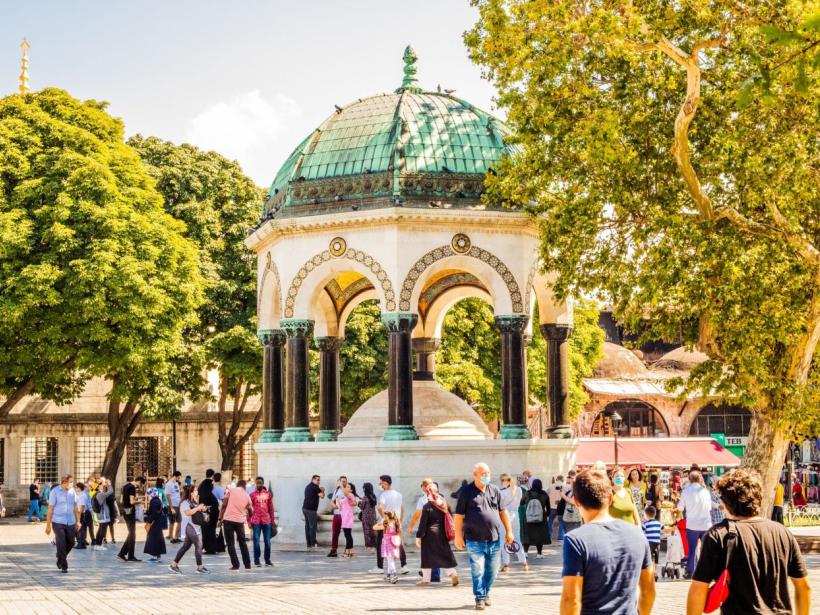
Istanbul remains a generally safe destination for tourists who stay aware of their surroundings. The UK FCDO and US State Department advisories, both updated in early 2026, do not single out Istanbul as a no-go area. The main risks match those of any large European city: pickpocketing, bag snatching, and occasional scams in crowded spots.
The historic Sultanahmet district, Taksim Square, and the Grand Bazaar are busy throughout the day and well-policed. Pickpockets work the tram lines and ferry terminals, so keep your phone and wallet out of back pockets. At night, the streets around Istiklal Avenue stay lively, but stick to well-lit main roads and avoid the narrow side streets off Tarlabaşı Boulevard after dark. Wear a cross-body bag to the front and leave a photocopy of your passport in the hotel safe. This solves most problems before they start.
How safe are the coastal resorts like Antalya and Bodrum?
The Mediterranean and Aegean resort areas, including Antalya, Bodrum, Fethiye and Marmaris, are far safer than the regions near the Syrian and Iraqi borders. The UK FCDO and the US State Department do not advise against travel to these coastal provinces, and they are far removed from the areas where official warnings apply. The main risks here are the petty crimes you would guard against in any busy European holiday destination.
Violent crime against tourists is rare in these resorts. The more common issues are pickpocketing in crowded bazaars, overcharging in some bars and restaurants, and occasional taxi scams. Keep your valuables in a hotel safe, carry only the cash you need for the day, and agree on a fare before getting into a taxi. In busy nightlife areas, watch your drink and stay with people you trust.
Pay attention to road safety if you plan to rent a car or use local dolmuş minibuses. Driving standards can be erratic, and some coastal roads are winding. Use a reputable car hire firm, check that your travel insurance covers you, and avoid driving at night outside the main towns.
What precautions should I take when travelling in Turkey?
Millions of people travel through Turkey without incident every year. Sensible precautions are similar to those you would take in any busy European city, with a few extra points about local customs and paperwork. You do not need to be fearful, but staying aware and prepared helps you avoid common mishaps.
These steps cover the practical side, from keeping your documents in order to using transport safely.
- Register your trip with your home country’s foreign ministry if the service is available, and save the local emergency number (112) and your embassy’s contact details in your phone.
- Carry a photocopy of your passport and keep the original in the hotel safe; Turkish law requires you to have ID with you, and a copy usually satisfies a routine check while keeping the real document secure.
- Stick to bottled water for drinking and brushing your teeth outside the main cities, and wash your hands often; the change in water and food can unsettle your stomach even in good restaurants.
- Dress modestly when visiting mosques or rural villages; women should carry a scarf to cover their head and shoulders, and both men and women should cover knees and upper arms.
- Use official yellow taxis or a trusted ride-hailing app, and agree on the fare or insist on the meter before you set off; avoid unmarked cars offering a lift at the airport or bus station.
- Keep an eye on local news and follow any instructions from the authorities if you see a large gathering or protest; it is sensible to move away calmly rather than stop to watch or take photos.
Is it safe to travel to Turkey as a solo female traveller?
Yes, many women travel through Turkey alone without serious incident. The experience varies by location. Istanbul and the coastal resorts are generally relaxed, while more conservative inland towns require a different approach. Unwanted attention is the most common complaint, ranging from persistent chat to being followed in quieter streets.
Dressing to blend in makes a noticeable difference. In Istanbul and beach towns, loose trousers and tops that cover the shoulders are fine. In central and eastern Anatolia, a longer skirt or trousers and a scarf to cover the head when visiting mosques are sensible. The scarf is not required on the street but shows awareness of local custom. Avoid direct eye contact with men you do not know and a firm “no, thank you” usually ends an unwanted conversation. Sitting in the women’s section on intercity buses and in tea gardens gives you space and often leads to friendly, genuine interactions.
A few practical habits remove most risks. Book accommodation with recent reviews from solo women. Keep your phone charged and a local SIM card active. When walking at night, stick to well-lit streets where families are out. If a situation feels off, step into a shop or hotel lobby. Trust that instinct, it is your most reliable guide.
Frequently asked questions
Is there a high risk of terrorism in Turkey?
The risk exists, as it does in many European capitals, but attacks in tourist areas have been rare in recent years. Security is visible at airports, major hotels, and public squares. Check your government's travel advisory just before you book for any short-term alerts.
Do I need special insurance for Turkey?
Standard travel insurance is fine for most of the country. If your policy excludes regions that official advisories warn against, avoid those areas so your cover remains valid. Always declare any pre-existing medical conditions when you buy the policy.
Is public transport safe for tourists in Turkey?
Yes, intercity buses and domestic flights are reliable and widely used. In cities, use official taxis or ride-hailing apps like BiTaksi to avoid fare disputes. Keep valuables out of sight on crowded trams and metro lines, just as you would anywhere else.
What about earthquakes in Turkey?
Turkey sits on active fault lines, and tremors occur. Tourist infrastructure in main resorts and Istanbul is modern and built to seismic codes. Download a local emergency app like AFAD’s, and know the evacuation route from your hotel, exactly as you would note a fire exit.
Photo: Ugur Bayır, Pexels (Pexels License)