
Is one week enough for Italy?
A week lets you explore two major cities without feeling rushed. You cannot see the whole country in seven days, but you can build a focused trip that pairs two iconic destinations with good train connections. Rome and Florence work best for a first visit because the high-speed rail link takes only 90 minutes, and each city offers a concentrated dose of art, history and food.
Spend four nights in Rome and three in Florence, or split them evenly. Rome needs more time for its scattered ancient sites and the Vatican. Florence suits a slower pace: most landmarks sit within a compact historic centre you can walk across in twenty minutes. Adding a third destination, such as Venice or the Amalfi Coast, will force you to sacrifice depth for transit time, and you will spend a full day just moving between places.
A focused week also costs less. Train tickets between Rome and Florence start at around €20 when booked in advance on Trenitalia or Italo, and you skip the cost and hassle of changing hotels. Pick one region and plan a return trip instead of trying to tick off every postcard view in one go.
What does the day-by-day itinerary look like?
This plan covers 3 days in Rome, a travel day to Florence, 2 days in the city, and a day trip into Tuscany. You can adjust the order, but this sequence groups the major sights without wasting time backtracking.
The schedule assumes a Saturday-to-Saturday trip, landing at Rome Fiumicino Airport and departing from Florence. It sidesteps the Monday closure of many state museums in Rome by placing them on other days.
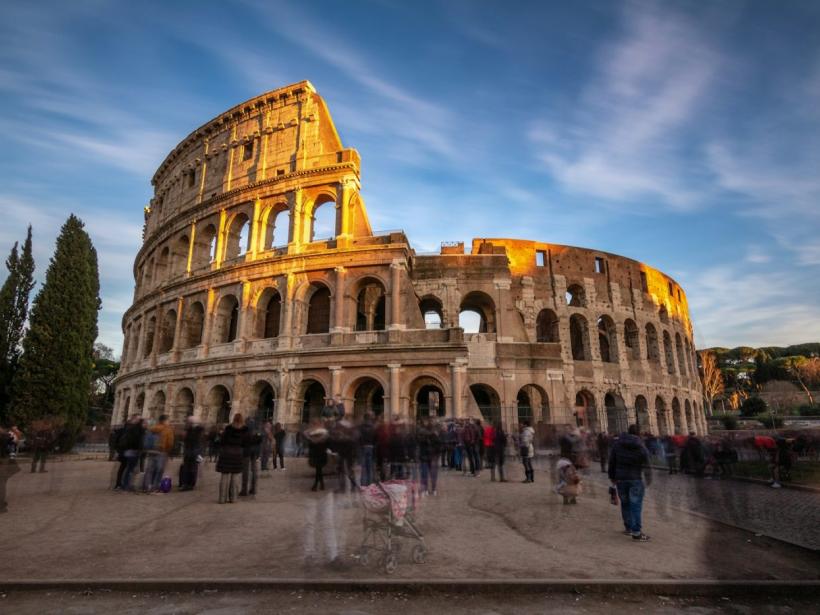
- Day 1, Saturday: Ancient Rome. Start at the Colosseum, then walk through the Roman Forum and up to Palatine Hill. Book a single combined ticket for all three. In the afternoon, stroll to the Pantheon and finish at Piazza Navona.
- Day 2, Sunday: Vatican and Trastevere. Visit the Vatican Museums and Sistine Chapel in the morning, and St. Peter’s Basilica after noon. The square is free to enter. Cross the river for an evening walk and dinner in the Trastevere neighborhood.
- Day 3, Monday: Central Rome. Museums are closed, so this day suits outdoor landmarks. Walk from the Spanish Steps to the Trevi Fountain, then along Via del Corso to the Altare della Patria. Climb the dome of St. Peter’s for a view over the city if you missed it Sunday.
- Day 4, Tuesday: Travel to Florence. Take an early high-speed train from Roma Termini to Firenze Santa Maria Novella. The journey takes roughly 90 minutes. Drop your bags, then spend the afternoon at the Duomo complex and climb Giotto’s Bell Tower for a view of Brunelleschi’s dome.
- Day 5, Wednesday: Renaissance Florence. Reserve a morning slot for the Uffizi Gallery, then walk to the Accademia to see Michelangelo’s David. Both require timed-entry tickets booked in advance. In the evening, cross Ponte Vecchio and climb to Piazzale Michelangelo for sunset.
- Day 6, Thursday: Tuscany day trip. Join a small-group tour or rent a car for a loop through Siena and San Gimignano. The drive from Florence takes just over an hour. Walk Piazza del Campo in Siena and taste Vernaccia wine in San Gimignano before returning by evening.
- Day 7, Friday: Departure or a free morning. Use the last morning for the San Lorenzo market or a quiet coffee at a piazza. Florence Airport is a 20-minute tram ride from the center, so a noon flight leaves time for a relaxed breakfast.
Pre-book all major museum tickets online before you travel. The Colosseum, Vatican Museums, Uffizi, and Accademia sell out days ahead during peak months, and a timed ticket saves you a two-hour wait in line.
How do you get between cities and book tickets?
Italy’s high-speed rail network makes the Rome, Florence hop straightforward. Trenitalia’s Frecciarossa and Italo trains cover the distance in about 1 hour 30 minutes. A standard-class seat typically runs from €35 to €55 when booked a couple of weeks ahead; last-minute walk-up fares can double that.
Book directly on the official sites to avoid middleman markups. For museum and landmark entry, advance reservations are not optional in peak months. You need a timed entry slot for the Colosseum, the Vatican Museums, the Uffizi Gallery, and the Accademia Gallery. Slots often sell out days or weeks ahead, especially from April through October.
- Colosseum and Roman Forum tickets are sold only at parcocolosseo.it. The standard full-experience ticket includes the arena floor and the underground levels.
- Vatican Museums and the Sistine Chapel are booked at museivaticani.va. Early-morning prime-entry slots carry a surcharge but let you into the galleries before the general public.
- Uffizi Gallery reservations go through uffizi.it. A Tuesday visit is quieter; the museum is closed on Mondays.
- Accademia Gallery tickets, for Michelangelo’s David, are sold at galleriaaccademiafirenze.it. The first Sunday of the month is free but attracts long queues without a reservation.
- High-speed train tickets between Rome and Florence are best bought at trenitalia.com or italotreno.it. Both sites let you store a digital ticket on your phone.
- Set a calendar reminder to book the Colosseum and Vatican slots as soon as your travel dates are firm, ideally three to four weeks before departure.
What does a realistic budget look like?
A mid-range week in Italy for one person costs between €1,250 and €1,800, excluding the international flight. The total depends on your choice of city, season, and how far ahead you book the fast trains. A couple sharing a hotel room can expect to spend roughly €2,000 to €2,800 together for the week.
Daily costs on the ground break down like this:
- Accommodation: A clean, central 3-star hotel or a well-rated B&B costs €100-160 per night for a double room. Book a month ahead to lock in the lower end of that range.
- Meals: Budget €35-55 per person each day. This covers a simple breakfast at a bar, a sit-down lunch with a main and water, and dinner with a glass of wine at a trattoria.
- Train tickets: The three fast-train legs (Rome, Florence, Florence, Venice, and Venice, Rome) total €90-140 if you book standard class on Trenitalia or Italo two to three weeks in advance.
- Attraction entry fees: Set aside €90-120 for the main ticketed sights. This includes the Colosseum, Vatican Museums, Uffizi Gallery, Accademia, and St. Mark’s Basilica with its terrace.
- Local transport: A weekly public transport pass in Rome costs €24, and a 48-hour vaporetto pass in Venice is €35. Add €20 for the occasional taxi or airport shuttle.
You can push the total below €1,000 by staying in a convent guesthouse, eating standing at the bar for lunch, and swapping the fast trains for slower regional ones. You trade time and comfort, not safety or experience.
What should you know about the day trip to Tuscany?
Reaching Siena and San Gimignano without a car is straightforward if you plan the bus connections carefully. From Florence, take the 131R bus from the bus station next to Santa Maria Novella train station. The journey to Siena takes about 1 hour and 15 minutes and drops you at Piazza Gramsci, a short walk from the historic center. There is no direct public transport between Siena and San Gimignano, so you will need to change buses in Poggibonsi. The 130 bus from Siena to Poggibonsi runs roughly every hour, and from there the 133 bus continues to San Gimignano in about 25 minutes. Buy your tickets at the bus station kiosk or a tabacchi shop before boarding and validate them in the machine on the bus. The last direct bus from San Gimignano back to Florence usually departs in the early evening, so check the current timetable on the Tiemme SpA website the day before.
In Siena, the Piazza del Campo and the cathedral complex are the main draws and sit within a compact, pedestrian-only zone. You can climb the Torre del Mangia for a view of the square or visit the Piccolomini Library inside the cathedral to see the frescoes. San Gimignano is smaller and can be explored in two to three hours. Walk to the Rocca di Montestaffoli for a panorama of the towers and surrounding vineyards, then stop at the Collegiata to see the 14th-century wall paintings. Both towns get crowded by late morning, so aim to be in Siena by 9:00 and in San Gimignano by early afternoon.
A guided tour is worth it if you want to visit a winery for lunch or cover more ground without watching bus schedules. Small-group tours from Florence typically cost more than the do-it-yourself bus ticket but handle all transport and a timed entry to the cathedral. The trade-off is less free time to wander, so check how long the tour allows in each town before you book. The independent option gives you full control over your pace and works best if you are comfortable with a simple bus change in Poggibonsi.
How do you avoid the biggest mistakes on a one-week trip?
The most common error is trying to fit Rome, Florence, Venice, and the Amalfi Coast into seven days. You spend more time checking out of hotels and sitting on trains than actually seeing anything. Pick two bases with one or two day trips, and accept that you are sampling the country, not completing a checklist.
Underestimating walking distances is another fast way to exhaust yourself. A day in central Florence can easily add up to 15,000 steps on cobblestones. Pack one pair of broken-in shoes, and plan a midday break back at your room before heading out for the evening.
Logistical oversights that derail a tight schedule:
- Skipping advance tickets for the Colosseum, Uffizi, and Accademia. Time slots sell out weeks ahead, and the standby queue can consume half your day.
- Booking a hotel far from the centre to save money. The time and taxi cost usually cancel any savings on a short trip.
- Planning an Amalfi Coast day trip from Rome. The round trip takes over six hours, leaving almost no time to explore.
- Not reserving high-speed train seats between cities. A full Friday afternoon train can force you onto a later departure and cost you an evening.
- Treating a travel day as a sightseeing day. Even a three-hour train ride, door to door, takes five hours out of your schedule.
- Ignoring jet lag on day one. A light walking tour and an early dinner help you adjust faster than a packed itinerary.
Frequently asked questions
Should I visit Venice or the Amalfi Coast on a one-week trip?
Adding either would mean losing at least a full day to travel and cutting time in Rome or Florence short. Venice works if you fly into Venice and out of Rome, but you will only get a rushed taste of each place. The Amalfi Coast is too far south for a week that already includes Rome and Florence.
Do I need to book Colosseum and Vatican tickets in advance?
Yes. Colosseum tickets on the official Parco Colosseo site release 30 days ahead and sell out quickly. Vatican Museums tickets open 60 days before on the Musei Vaticani site. Without a reservation in peak months, you may wait two hours or not get in at all.
Is a rental car useful for this itinerary?
Not for the city portions. A car is a liability in Rome and Florence because of ZTL zones, limited parking, and traffic. It can be useful for the Tuscany day trip, but buses and trains connect Siena and San Gimignano reliably, so a car is optional rather than necessary.
What is the best time of year for this trip?
April, May, late September, and October give you pleasant weather and fewer crowds than the summer peak. July and August are hot and crowded, and many smaller restaurants and shops close for part of August. Winter is quieter but you will have shorter daylight hours for sightseeing.
Photo: Marco Grosso, Unsplash (Unsplash License)