
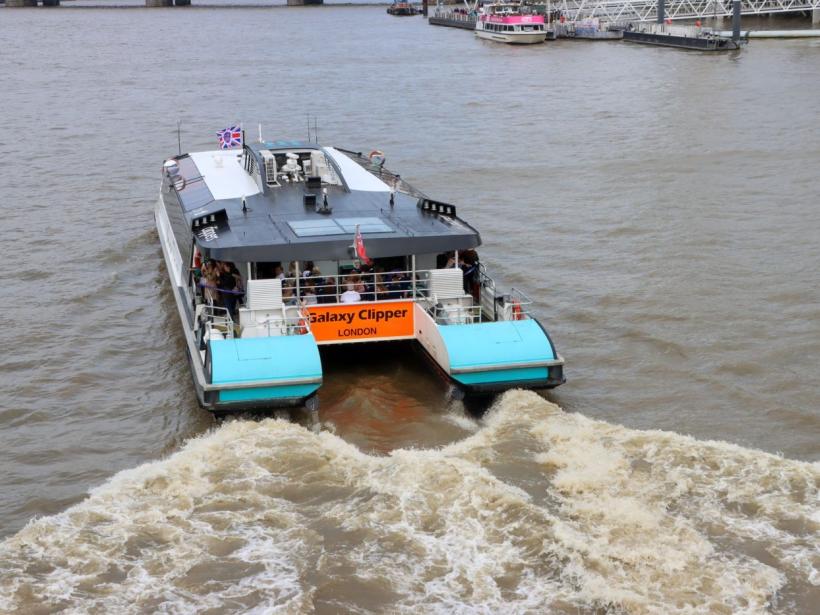
What types of Thames cruise are there in London?
Thames cruise operators in London offer five main types of trip. Your choice depends on how much time you have, whether you want a meal, and the pace you prefer.
Standard sightseeing cruises run between piers such as Westminster, the London Eye and Greenwich, with live or recorded commentary. Dining cruises offer lunch, dinner or Sunday roast while you pass the landmarks, and afternoon tea cruises serve a full tea service with sandwiches and scones on a shorter loop. Speedboat rides, often branded as Thames Rockets or Rib Voyages, cover the same central stretch at high speed with music and a guide. Hop-on hop-off services let you board and disembark at several piers with a 24-hour or 48-hour ticket, which is useful if you want to combine the river with visits to the Tower of London or Borough Market.
- Sightseeing cruises with live commentary, running a set route from Westminster to Greenwich and back.
- Dining cruises that serve a plated lunch, dinner or Sunday roast while you travel past the central landmarks.
- Afternoon tea cruises with finger sandwiches, scones and tea, usually on a one-and-a-half-hour round trip.
- High-speed rigid inflatable boat rides that cover the same sights in less time with music and a lively guide.
- Hop-on hop-off river passes valid for a day or two, with stops at major piers so you can explore on foot between trips.
How long does a typical Thames cruise take?
Most sightseeing trips between Westminster and Tower Bridge last 30 minutes one way or about an hour for a return journey. A hop-on hop-off ticket is typically valid for 24 hours, so you can use the boat as transport all day, getting on and off at piers from Westminster to Greenwich. A full loop without disembarking takes two to two and a half hours, depending on tide and river traffic.
Meal cruises are longer. A lunch cruise usually runs for 90 minutes, while a dinner cruise with live music takes around three hours and covers more of the river, often reaching Canary Wharf and back. Speedboat trips are the shortest option: the high-speed blast along the central stretch lasts about 40 to 50 minutes from departure to return, with no stops. If you travel all the way to the Thames Barrier, allow at least three hours for a direct round trip, and longer with commentary.
What will I see on a Thames river cruise?
The most popular sightseeing route runs between Westminster and Greenwich, passing a dense cluster of London landmarks on both banks. You see the Houses of Parliament and Big Ben from the water within minutes of departure, a view that is impossible from land. The London Eye stands directly on the south bank, and most boats pass close enough for a clear photo without the crowds at ground level.
Tower Bridge is the visual centrepiece of almost every cruise. Boats slow down as they approach, and you pass directly underneath the raised bascules. Immediately before it on the north bank sits the Tower of London, with Trafalgar Square and the National Gallery visible further inland. On longer routes that continue to Greenwich, you also see the Cutty Sark, the Old Royal Naval College and the skyscrapers of Canary Wharf rising across the river bend.
- The Houses of Parliament and Big Ben appear on the north bank right after Westminster Pier.
- The London Eye sits on the south bank, with boats passing at close range.
- Tate Modern occupies the former Bankside Power Station, recognisable by its tall brick chimney.
- Shakespeare’s Globe, a faithful reconstruction of the Elizabethan playhouse, stands a short walk from the river.
- Tower Bridge marks the point where most shorter cruises turn around, with the Tower of London beside it.
- The Cutty Sark and the Royal Observatory at Greenwich are visible on routes that extend past Tower Bridge.
What affects the price of a Thames cruise?
The final cost depends on a few practical choices rather than one fixed rate. A simple 30-minute pier-to-pier hop with a standard operator costs noticeably less than a three-hour evening sailing with a three-course meal and live music.
Booking online a day or two ahead almost always costs less than buying at the pier, especially during school holidays and weekends. The time of day matters too: a midday sightseeing trip is typically the cheapest option, while sunset and after-dark departures cost more because demand is higher and the onboard atmosphere changes.
- Cruise type: a basic sightseeing loop is the most affordable, while dining cruises, afternoon tea sailings and private hires sit at the top of the price range.
- Duration: a 30-minute Express ticket costs less than a two-hour round trip, simply because you cover fewer river miles and use less crew time.
- Time of day: morning and early afternoon departures are usually cheaper than late afternoon, sunset or evening slots.
- Food and drink: the difference between a dry ticket and one that includes a glass of sparkling wine or a full dinner can double the fare.
- Advance booking: online prices are almost always lower than pier-side rates, and you lock in a place on popular sailings that otherwise sell out.
How do I choose the right Thames cruise for me?
Start with who is travelling with you. A family with young children will enjoy a short sightseeing trip with open-air deck space and live commentary that keeps everyone engaged. For a couple on a weekend break, an evening cruise with a meal or a glass of wine suits a slower pace. Solo travellers often prefer a hop-on, hop-off pass that lets you explore at your own speed.
Next, match the cruise length to your schedule. If you have a packed day, a 30 to 60 minute circular route from Westminster to Tower Bridge delivers the key sights without eating into your time. A half-day trip to Greenwich works well when you want to combine the river with a museum visit. Save a full-day cruise for a relaxed itinerary where the journey itself is the main event.
Finally, think about the experience you want. A standard sightseeing boat with recorded or live guide covers the landmarks efficiently. A high-speed RIB ride appeals to those who want an adrenaline element on the water. An afternoon tea cruise is a good middle ground, offering a calm pace with a defined onboard activity.
When is the best time to take a Thames cruise?
Late spring and early autumn give you the best balance of mild weather and manageable crowds. From May to June and September to early October, you avoid the peak summer rush while still enjoying decent daylight hours and a higher chance of clear skies. The river gets crowded in July and August, with longer queues at piers and busier boats.
Winter cruises between November and February are quieter and often feel more spacious, but the open upper decks can be cold and the low sun creates sharp glare on the water. If you book in December, some operators add seasonal touches like mulled wine on board. The worst conditions tend to come in January and February, when a biting wind off the water makes the open-air sections uncomfortable for more than a few minutes.
Time of day changes the experience as much as the season. A mid-morning cruise lets you board before the lunchtime rush and gives you soft, even light for photographs. Late afternoon sailings catch the golden hour over the water, and a well-timed departure around sunset shows the riverbanks as the city lights start to come on. Evening cruises are cooler in every season but offer the most dramatic views of illuminated landmarks.
Frequently asked questions
Do Thames cruises run all year round?
Yes, most sightseeing and hop-on hop-off services operate every day except Christmas Day. Some dining and afternoon tea cruises may have a reduced schedule in January and February, so check the operator's timetable before you book.
Can I use an Oyster card or contactless payment on Thames boats?
Only on the Uber Boat by Thames Clippers hop-on hop-off service. For all other sightseeing and dining cruises you need a separate ticket, which you buy online or at the pier.
Are Thames cruises suitable for children?
Yes, most daytime sightseeing cruises welcome families. Speedboat rides usually have a minimum age or height requirement, so check the operator's rules before you book if you have young children.
Which pier should I start from?
Westminster Pier is the most common starting point because it sits right by Big Ben and the Houses of Parliament. Tower Pier and London Eye Pier are also popular, and the best choice depends on which part of the river you want to see first.
Photo: Shola Pixel, Pexels (Pexels License)